Three textures.
One starting point.
Similar colors make the texture easier to compare. These examples show different surface structures; they do not tell you how a particular product will perform.
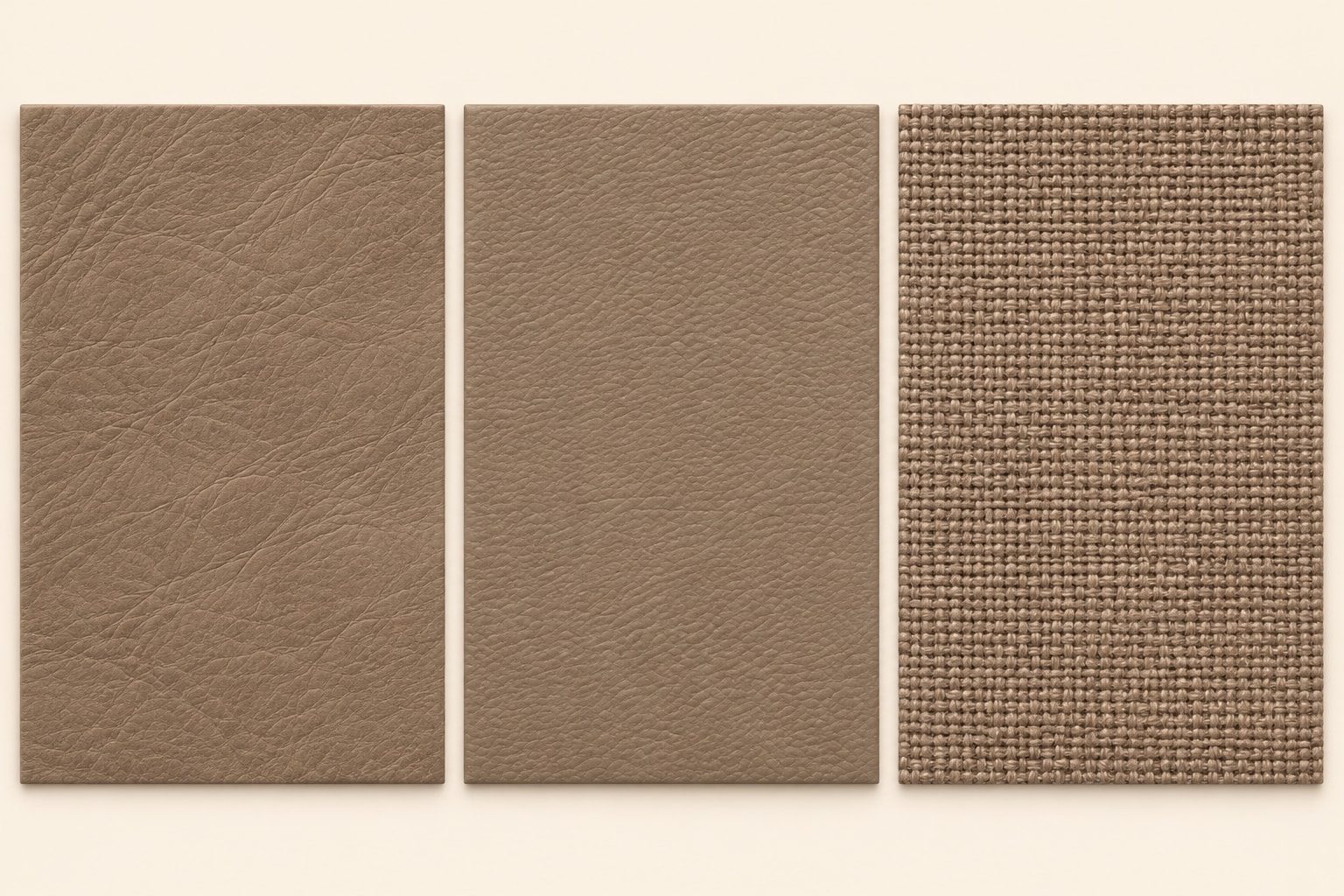
- Leather
- Look closely at the grain and finish. Natural variation and surface treatments can change its appearance.
- Vinyl
- A coated surface can carry an embossed texture. Check the specific product's intended use and care.
- Woven fabric
- Crossing threads create the visible weave. View a larger sample for pattern, direction and scale.
Examples arranged left to right: leather, vinyl and woven fabric. Appearance alone cannot reliably identify a material or establish durability. Handle the actual samples before choosing.
Leather
Leather offers a particular grain and feel, but the word alone does not describe how a material will behave. Finishes, surface treatments and care instructions differ. Ask to handle the actual sample and discuss how changes in appearance would fit your expectations. A carefully matched repair can be a different challenge from choosing leather for a complete interior. An older surface may not match a new hide exactly.
Vinyl
Vinyl can be a useful option when a wipeable surface or a particular color and texture matters. Different products are made for different applications; a furniture sample is not automatically a boat-seat material. Discuss sun exposure, moisture, cleaning products and contact with clothing or equipment. Even when a surface resists water, seams, openings and the cushion beneath it need separate consideration. Avoid treating a material label as a promise for the entire assembly.
Fabric
Fabric opens up a wide range of weaves, patterns and tactile finishes. Think about the whole setting: a frequently used dining chair, a favorite reading chair and an exposed boat cushion have different demands. Ask about the specific fabric’s intended application and care directions. Look at a larger sample when pattern scale matters. On a coordinated interior or a set of chairs, seams and pattern placement are part of the design.
Compare samples on your piece
View your shortlist beside the surrounding trim, wood or paint, and in the light where it will be used. Consider contrast stitching, piping and existing panels at the same time. For vehicle seats, material selection is one part of a wider construction decision; describe any integrated features so they can be considered. Confirm the product and color before work begins, and keep its care information with the finished piece.
Common questions.
Is one material always the most durable?
No single category settles that question. The specific product, intended use, exposure, construction and maintenance all matter. Compare suitable products for the same application rather than relying on the material name alone.
Can I choose a color from my screen?
A screen is useful for narrowing a direction, but it cannot reliably show the final color, texture or sheen. Review a physical sample before committing to a material.