Name the work as precisely as you can
Start with the number of pieces and the surfaces involved. A repaired seat panel, a fully recovered seat and a complete interior are different scopes, even when all three begin with the same tear. If you are considering a localized repair and a fuller recover, ask for the differences to be described. Include the appearance you hope to keep, the areas that can remain and any changes to the cushion beneath.
Repair a panel
Focus on one damaged area and how it will match the material around it.
Re-cover a piece
Plan a complete seat or cushion cover, plus any work needed beneath it.
Plan an interior
Coordinate seats, panels, carpet and headliner within one agreed scope.
Make room for what the cover cannot show
Photos can show a split seam or worn surface without revealing the condition of the foam, backing or supporting parts. Previous repairs and signs of moisture are useful context to share. Ask which findings are already established and which need inspection or access beneath the cover. If underlying work is uncertain, ask how it is treated in the estimate and what would need to be discussed before adding it to the scope.
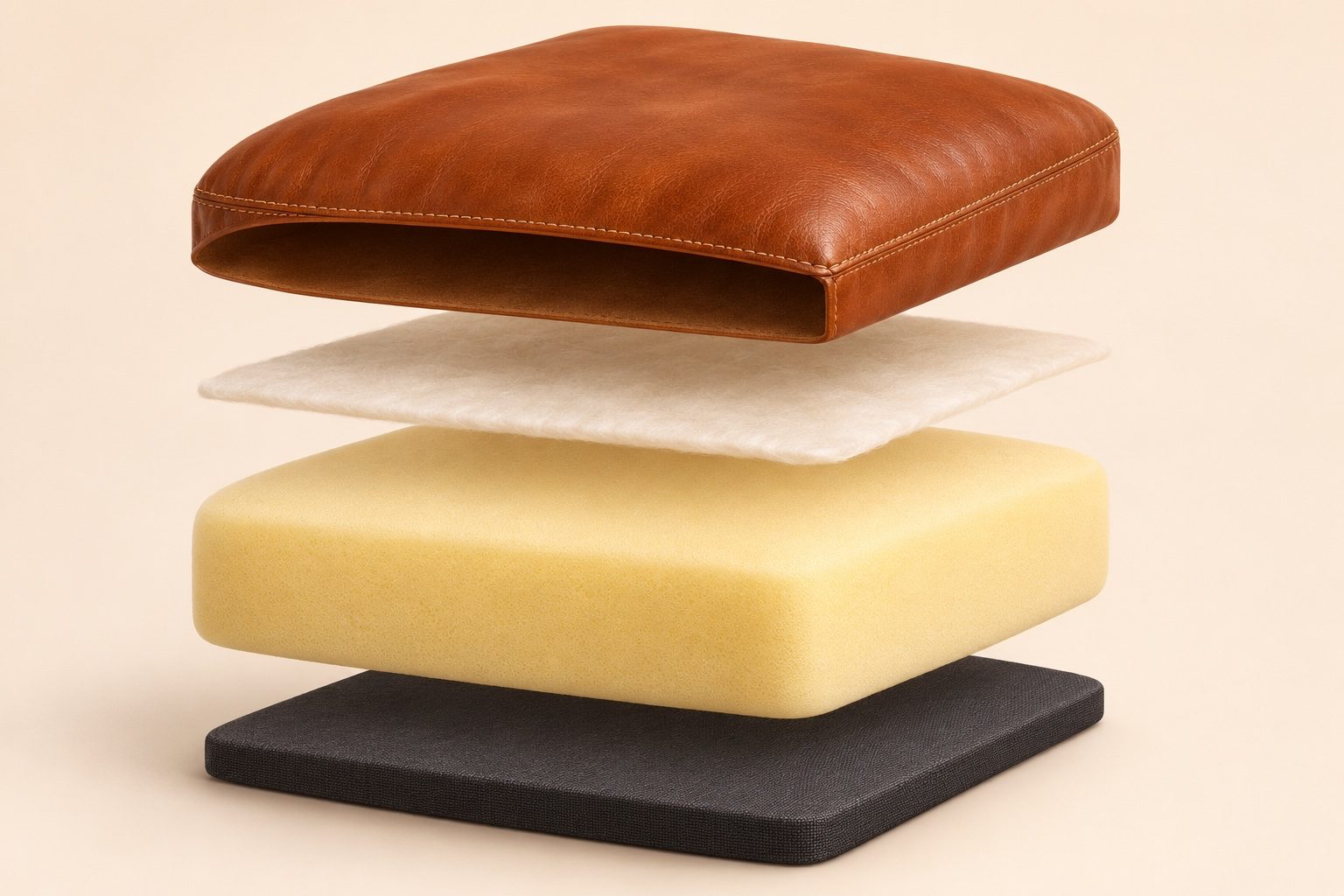
The visible material, seams and pattern.
A soft layer beneath the cover.
The cushion’s shape and feel.
The support beneath the cushion.
A simplified cushion example. The layers and supporting parts vary by piece; their condition helps define the work.
Look at material and construction together
The material name is only one part of the choice. The specific product, amount required, pattern placement and seam design can all affect the work involved. A repeating fabric pattern or carefully positioned insert may change how material is laid out and cut. Piping, pleats and contrast stitching add decisions of their own. Compare the actual products and agreed details, including which surfaces receive each material, rather than comparing broad labels alone.
Include the work around the upholstery
A loose cushion and an installed interior component arrive with different practical needs. Ask whether removal, refitting, hardware and any required work by another specialist are included or separate. For vehicles, describe integrated seat features and the parts you want upholstered. For furniture or removable cushions, clarify the pieces and dimensions involved. These details help establish the full scope; do not assume that every task needed to finish the project belongs to one provider.
Put estimates side by side
Use the same brief for each option, then mark any difference before judging the total. A lower figure may cover fewer surfaces, a different material or less underlying work. These questions make the comparison more useful.
| Part of the scope | What to clarify |
|---|---|
| Pieces and surfaces | Which pieces, panels and quantities are included? Is this a repair or a full recover? |
| Underlying condition | What foam, backing or supporting work is included, and what remains unassessed? |
| Material selection | Which product and color are specified, and which surfaces will use them? |
| Construction details | Are pattern placement, inserts, seams, piping and other finishes described? |
| Removal and fitting | Who handles removal, refitting, transport and any work by another specialist? |
| Assumptions and changes | What is excluded or provisional, and how would a change be discussed and agreed? |
Ask how open decisions affect the estimate
Before proceeding, ask whether the figure depends on inspection, a final material choice or another unresolved detail. Ask what the estimate includes, what it excludes and how long its assumptions remain useful. If a different condition or design choice changes the work, how would you review the revised scope and cost before authorizing that change? Keeping the selected option and its open questions together gives everyone a clearer basis for the next decision.
Your estimate comparison checklist
Keep these six points beside the estimates you receive. Record an answer or an open question for each one.
- List the pieces, quantities and affected surfaces, with photos that show the whole piece and each issue.
- Identify whether each option covers a localized repair, a full recover or a wider set of components.
- Record the proposed material product, color, surface coverage and construction details.
- Separate included foam, backing and supporting work from conditions that still need assessment.
- Clarify who handles removal, refitting, transport and any work outside the upholstery scope.
- Ask about assumptions, exclusions and how you would review and agree to changes before added work begins.
Common questions.
Why might an estimate change after an inspection?
An inspection may reveal underlying condition or construction details that photos could not show. A material or design choice can also change the scope. Ask which assumptions supported the first estimate and how any revised work and cost would be presented for your decision.
Does choosing a less expensive material make the whole project less expensive?
It may reduce one part of the cost, but the quantity, cutting, construction and underlying work still matter. Compare the complete estimate using the specific material proposed. A material choice is most useful when it also suits how the piece will be used.
Can I compare a repair estimate with a full reupholstery estimate?
Yes, as different options with different results. Record what each one keeps, replaces and leaves unresolved. The surrounding condition, potential material match and extent of wear can influence whether a localized repair is worth considering; the totals alone do not explain that choice.
Will splitting a project into stages reduce the total cost?
Staging can spread decisions and spending, but it does not automatically reduce the overall cost. Ask whether later stages would repeat removal or fitting work, and whether the same materials would remain available. Compare a staged plan with the complete scope before choosing.