Decide what kind of classic interior you want
An original-style direction uses period appearance as its reference. A custom direction gives you more freedom with materials, colors and details. A restomod keeps a classic character while accommodating selected modern features. These are useful descriptions of intent, rather than guarantees about authenticity or specification. Name the features that matter to you: perhaps the seat pattern, a familiar color combination or the relationship between the upholstery and the dashboard. Use those priorities to guide later choices.
Original-style
Use the period appearance, patterns and details as your reference.
Custom
Choose a personal combination of materials, colors and finishes.
Restomod
Keep a classic character while planning for selected modern features.
Give every component a decision
Walk through the interior on paper before choosing a single material. For each component, record its visible condition and mark a provisional choice: preserve, repair or renew. Leave an assessment question where the right approach is unclear. This inventory separates a complete design plan from the work you may authorize first.
Scroll sideways to compare all columns.
| Component | What to record | Decision to discuss |
|---|---|---|
| Seats | Cover condition, cushion shape, patterns and features to retain. | Preserve existing surfaces, assess a repair or plan new covers and any underlying work. |
| Door panels and armrests | Panel condition, inserts, edging and their relationship to the seats. | Retain sound pieces, repair selected areas or renew the upholstery together. |
| Headliner | Visible wear, sagging, surrounding trim and any signs of moisture. | Assess what can stay and what needs renewal after underlying issues are understood. |
| Carpet | Wear, fit, bindings, visible damp and the areas covered. | Preserve usable sections or plan replacement with access and fitting considered. |
| Trim and covered surfaces | Retained colors, finishes, dashboard or console coverings and adjacent fittings. | Identify what stays, what needs assessment and which work belongs to another specialist. |
Record the details you want to carry forward
Take clear overall and close-up photos before work starts, including seam patterns, piping and transitions between materials. Keep reference images separate from photos of your own car, and note what each reference explains. Record any known material names or earlier modifications without assuming they establish an original specification. If preservation matters, ask which existing pieces can serve as references and how they should be documented before removal. Avoid dismantling installed parts just to gather information.
Choose materials across the interior
Review seat materials beside carpet, headliner and trim samples, including any surfaces that will remain. Color, texture, sheen and pattern scale all affect how the interior reads together. Ask about product availability and the amount needed for the agreed scope. For staged work, discuss whether material should be planned across phases and how it would be stored. Keep product references and approved samples; a later order may not reproduce the same appearance exactly.
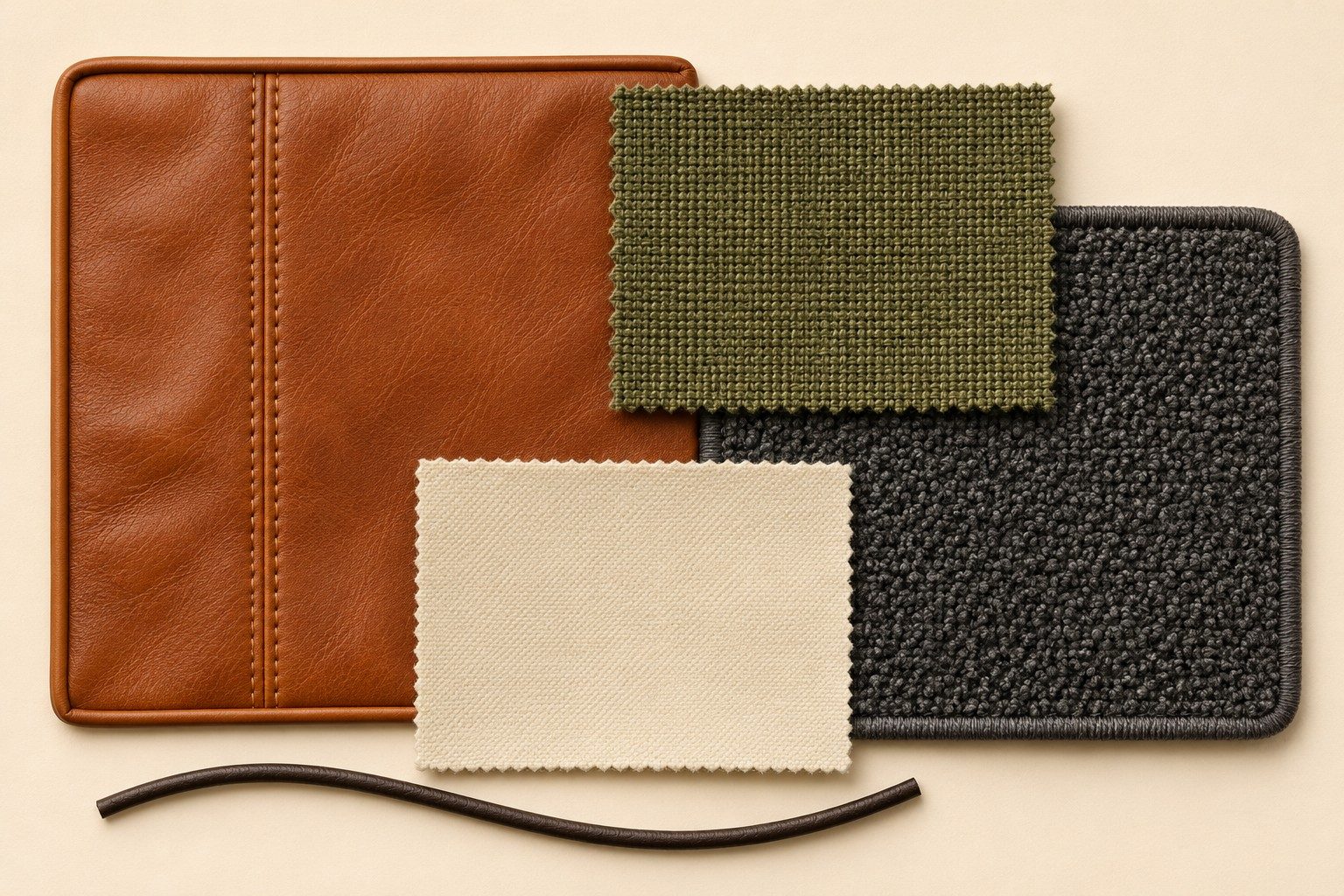
Compare color, texture and sheen together, then review physical samples and current availability for your project.
Coordinate the work that touches the interior
Paint, body, mechanical, electrical and upholstery work can overlap around the same components. Share the interior plan with the people responsible for those jobs and ask which tasks need access before finished surfaces are fitted. Identify unresolved leaks or damp so their cause can be addressed by the appropriate specialist. There is no single sequence for every car: agree on the dependencies, responsibility for removal and refitting, and protection of completed work for this project.
Give each phase a clear boundary
If you plan to work in stages, define what each phase includes and what it leaves for later. Note the materials, patterns and edges that must connect with future work. Ask whether a later task would disturb a finished component or repeat fitting work. Keep the full inventory alongside each phase so a single-seat repair does not quietly become a different design direction. Revisit the plan when condition, availability or your priorities change.
Your classic interior planning checklist
Use these six points to prepare a shared brief before committing to materials or a first phase of work.
- Describe the intended direction: original-style, custom or restomod, with the features you most want to keep.
- Inventory seats, panels, headliner, carpet and trim; mark each preserve, repair, renew or assess.
- Photograph existing details and label reference images, known materials and earlier modifications.
- Review materials together and record product references, availability and any decisions needed for later phases.
- Discuss access, leaks, removal, refitting and completed-work protection with everyone whose work touches the interior.
- Define what each phase includes, what remains open and how future work will connect with the finished pieces.
Common questions.
Do I need to renew the entire interior at once?
Not necessarily. A whole-interior plan can include preserved components and work completed in stages. Discuss how materials will match, which tasks share access and whether later work would disturb completed pieces before deciding where the first phase should stop.
What if the original material is no longer available?
Discuss which qualities matter most: the pattern, texture, color or overall period appearance. Compare available samples against documented references and record the compromise you choose. An original-style result should not be described as an exact reproduction unless the material and specification support that description.
Should paint or mechanical work happen before upholstery?
The order depends on the work and the access it requires. Ask the people involved which components must be removed, which surfaces need protection and whether unresolved issues could affect new upholstery. Agree on the sequence for the car rather than applying a fixed order to every project.
Does an interior plan mean one shop handles every part of the project?
No. The plan can connect work performed by different specialists. Clarify who is responsible for upholstery, supporting repairs, mechanical or electrical work, removal and refitting. Keep those responsibilities alongside the component inventory so the scope of each part is clear.