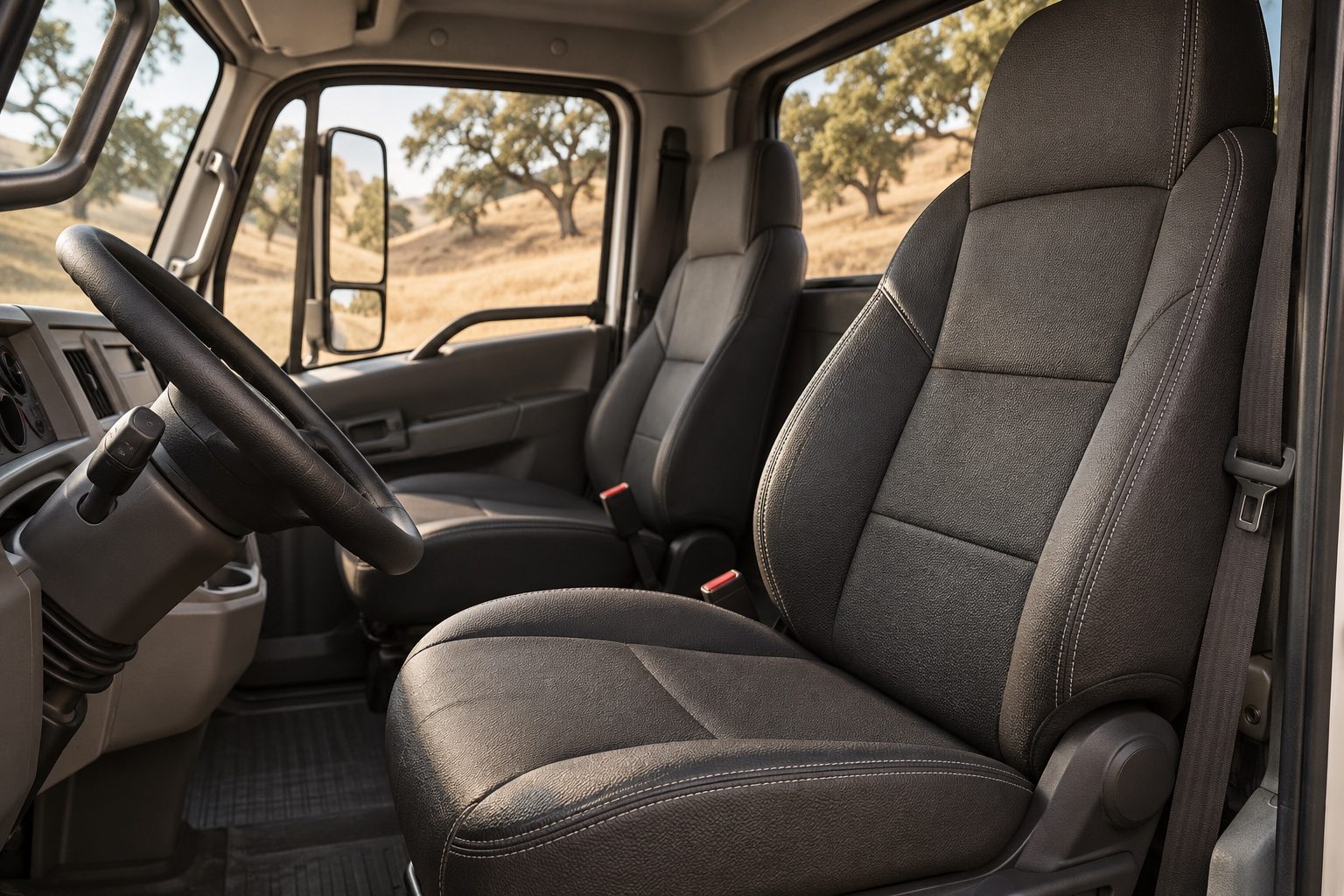
A worn driver’s seat or split school-bus cushion is a practical problem with a scheduling consequence. Fleet upholstery starts with the vehicles, the damage and the time each unit can be available. Plan seat covers, foam and upholstered panels together with the people responsible for keeping the fleet in service.
List the vehicle types, years and the number of seats or panels involved. Heavy-truck driver seats and school-bus seating have different constructions and uses. Photographs of representative units help establish whether similar-looking damage is actually the same job.
Assess covers and support together
Split vinyl, opened seams and worn edges may be accompanied by compressed foam or damaged support. Define whether each unit needs a local repair, replacement panels, a new cover or additional cushioning work. Separate upholstery from frame, mounting, restraint or mechanical concerns so the person approving the work understands what is included.
Review materials for the application
Consider wear patterns, cleaning routines and the construction of the seat when discussing replacements. Any vehicle-specific material or seating requirements should be identified before products are selected. Availability and matching across the fleet also affect the plan.
Plan practical batches
A representative vehicle or seat can help establish likely work before further units are scheduled. Discuss priorities, access and how many vehicles can be out of service at once. Record the included units, material choices and exclusions, then agree on a phased schedule around inspection findings, materials and available capacity.
BEFORE YOU BEGIN
Details that shape the work.
Vehicle types, years and number of seats or panels
Photographs of representative damage and any variations between units
Vehicle availability, priority units and downtime constraints
Cleaning routines, material requirements and the person coordinating approval
Common questions.
Can heavy-truck and school-bus seats be assessed?+
Yes, include the vehicle details, seating type, quantity and photographs when describing the project. The condition and construction of the actual seats determine the upholstery scope and any separate issues that need attention.
Can the work be scheduled in batches?+
A phased approach can be discussed. It depends on the number of units, condition differences, material availability and shop capacity. Agree on the sequence and vehicle availability before relying on a particular turnaround.
Will new vinyl fix a seat that feels flat?+
A new cover changes the surface, but compressed foam or an issue with the support may need additional work. Describe both the visible damage and how the seat feels so the assessment includes the underlying condition.
Can every vehicle receive the same repair?+
Not necessarily. Similar wear can hide different foam, support or attachment conditions. Reviewing a representative unit helps with planning, while each included seat or panel still needs an appropriate assessment.
What should a fleet brief include?+
List the vehicles and quantities, show representative damage, identify priority units and explain when they can be available for in-shop work. Include any known material requirements and a contact who can approve the scope. Photographs support planning but do not establish a final fleet-wide price or schedule.