Find the common thread
A small, coherent palette can connect seats, doors and floor. Consider the exterior and existing trim before choosing the pieces that will change.
Custom does not have to mean more of everything. It might be a different texture, a quieter stitch or a completely new palette. Start with how you want the cabin to feel, then explore materials and details that suit the vehicle, its construction and your everyday use.
Text a full view of your piece and a close-up of what needs attention.
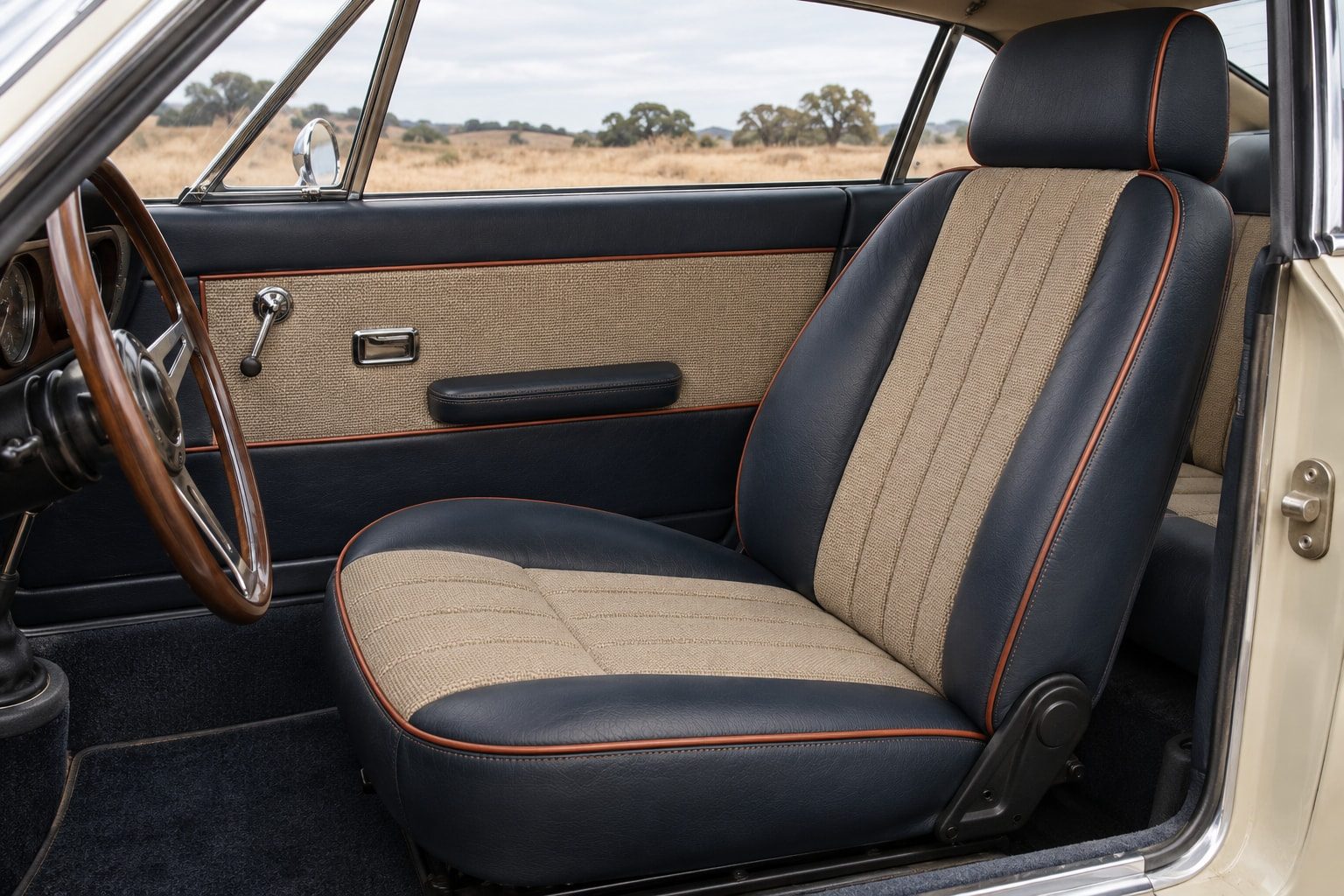
A small, coherent palette can connect seats, doors and floor. Consider the exterior and existing trim before choosing the pieces that will change.
A material that looks right in a photograph may behave differently in use. Feel, stretch, exposure and intended application all deserve attention.
Seam layouts and shapes must work with the seat and trim construction. Discuss ideas against the actual components before treating a sketch as a final specification.
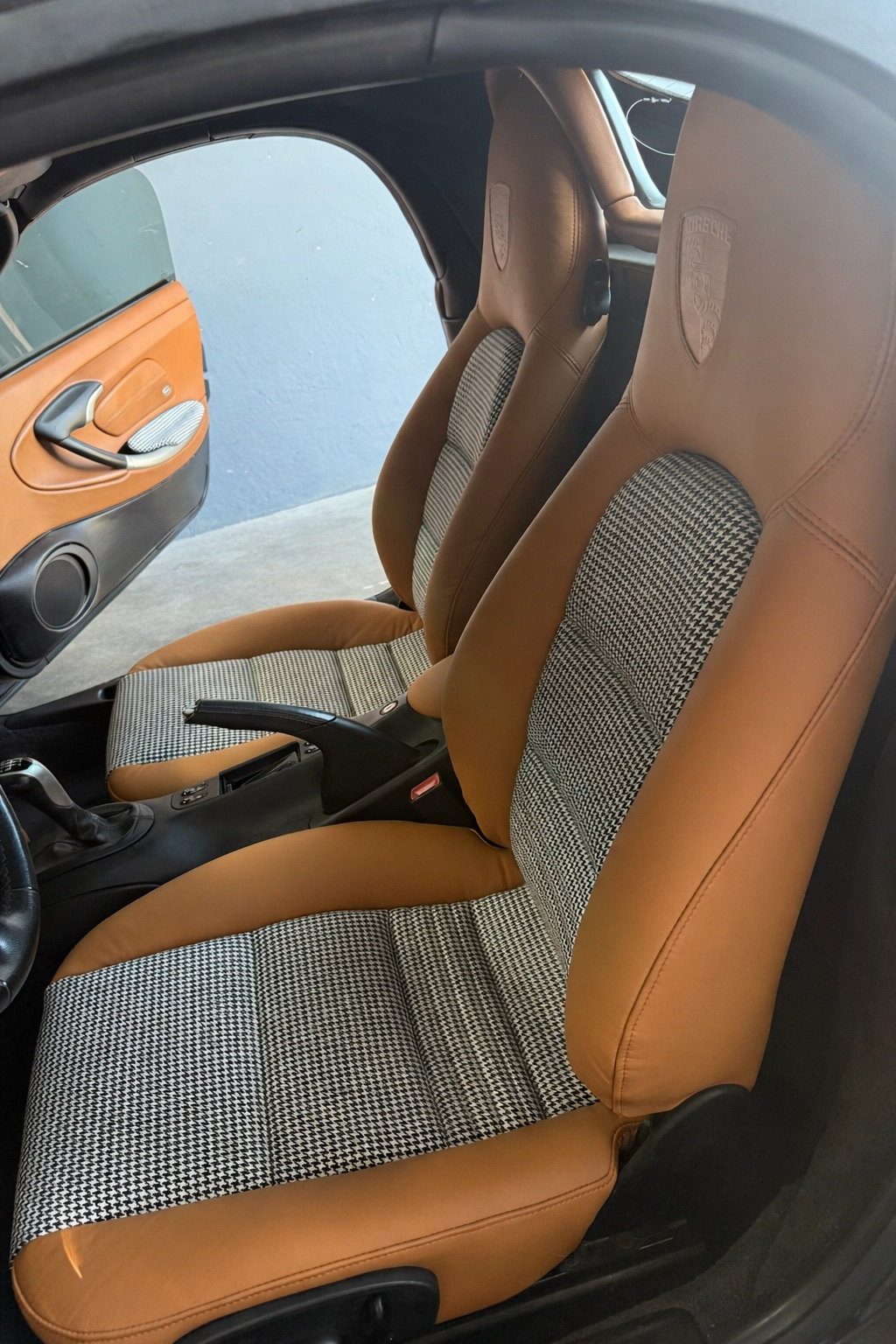
Saddle-toned bolsters frame houndstooth centers in this Boxster S seat project. The work included front seat covers, foam inspection and cover fitment, with a matching door insert. Photographs follow the seats from exposed foam through the finished covers and back into the cabin.
View the Boxster S project Explore more of our workNo. A few clear references, the vehicle details and a sense of what you like are enough to begin. Material and construction choices can then be discussed together.
It can be a useful reference, but proportions and construction differ. The idea needs to be adapted to the actual seats and panels rather than assumed to transfer exactly.
Yes, a project can begin with a defined area if its construction is suitable. Consider how the new material and detailing will relate to the surfaces that remain.
Tell us what you’d like to repair, restore or reimagine.
Text a full view of your piece and a close-up of what needs attention.