Understand the backing
When the layer beneath the fabric deteriorates, simply securing the loose area may not address the wider failure. The full surface needs assessment.
Sagging roof lining, loose fabric or water staining? Craig’s checks the fabric, backing and headliner board before recommending a repair or replacement. Recovering the existing board may be appropriate when its condition allows. Moisture, a damaged board or previous fixes can change the work needed.
Text a full view of your piece and a close-up of what needs attention.
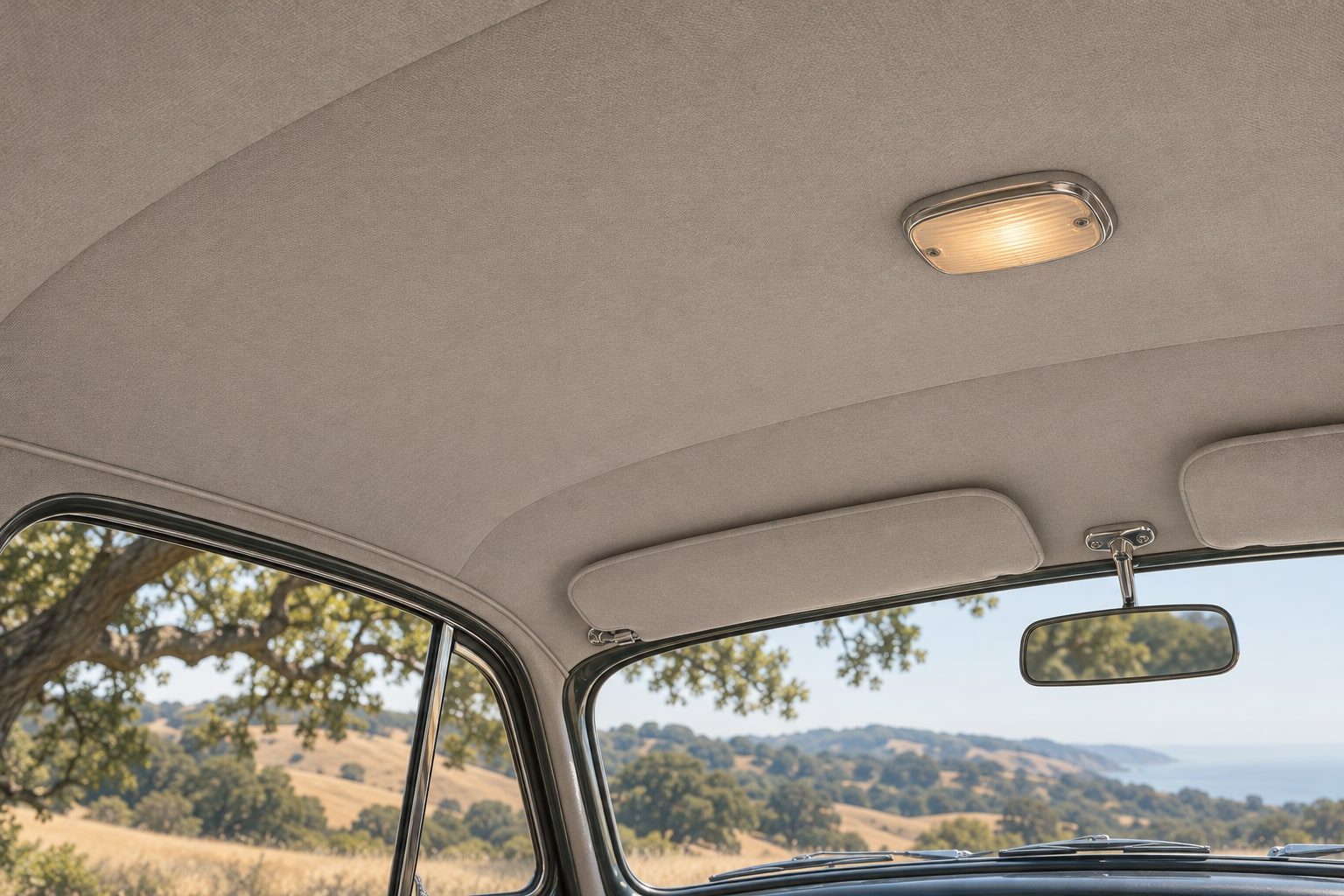
When the layer beneath the fabric deteriorates, simply securing the loose area may not address the wider failure. The full surface needs assessment.
Headliner fabric should be considered beside pillars, visors and other trim. A close original-style match and a different finish are separate design choices.
Staining, moisture or a distorted board may need attention before new material is fitted. Upholstery alone does not resolve an active leak.
A sagging roof lining can involve more than its visible cover. The backing and board help determine whether a repair or recovering makes sense.
Simplified view of a common foam-backed headliner; construction varies. The layers are separated here to explain their roles. Water staining, a distorted board or previous repairs need assessment too.
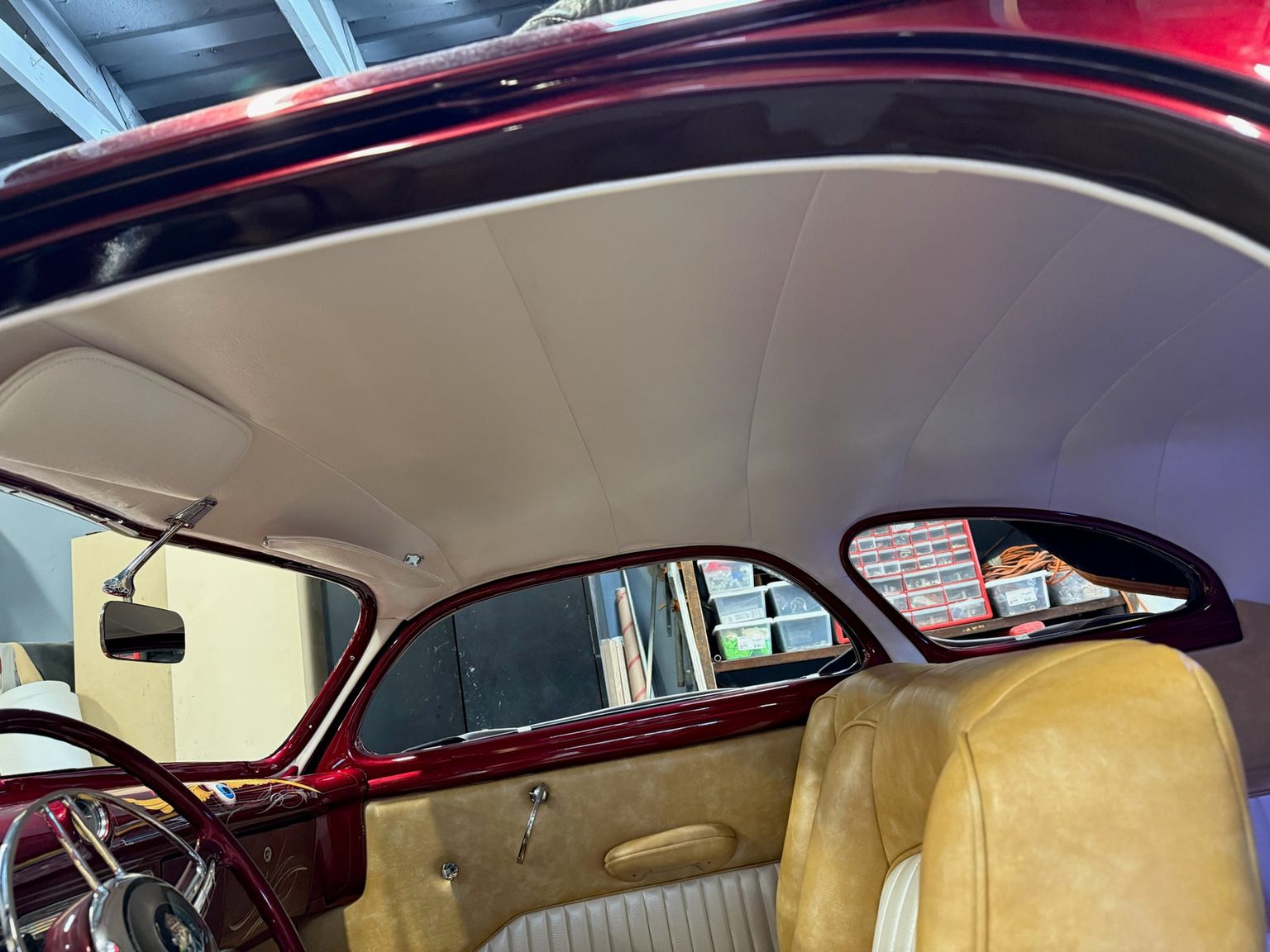
See the Buick Eight’s headliner as part of a coordinated classic interior, alongside its seating and trim.
View the Buick Eight project Explore more of our workYes. Headliner, roof lining and roof liner commonly describe the fabric-covered ceiling inside the vehicle. This is interior upholstery, separate from the exterior roof or sunroof glass.
Sometimes. A small, isolated loose area may be repairable if its backing is sound. Widespread sagging or deteriorating foam may make replacement more appropriate. Inspection determines the useful scope.
Shade fabric and the surrounding ceiling can be separate upholstery areas. Tell us which is affected. Glass, operating mechanisms and weather seals are a separate scope; mention leaks or operating problems before scheduling.
Heat, age, moisture and deterioration of the foam backing or adhesive can loosen the cover. Previous repairs also affect what we find. The backing may be failing even if the visible fabric looks intact.
Mention what was used. Pins or adhesive may temporarily hold an area but do not restore failed backing. Residue, dimples and uneven surfaces can affect preparation. The condition needs assessment before a lasting approach is agreed.
Available materials should be compared with the surrounding trim. Fading, texture and product availability affect how closely the new surface can blend. Review the material before deciding on a close match or a different finish.
The plan may include removing surrounding trim, taking out the board, preparing sound backing and fitting new material around lights, visors and other hardware. A damaged board or different vehicle construction can change the work. Confirm the included components after inspection.
Vehicle size, roof configuration, trim, hardware, material choice and backing preparation all matter. Staining, water damage and earlier repairs can change the recommendation. Confirm the scope, estimate and schedule after assessment; an active water source may need separate attention.
Include the vehicle’s year, make and model, whether it has a sunroof, which area is affected, and any staining, water damage or earlier fixes. A wide ceiling view and close-ups help start the conversation. Call, text photos or use the quote form.
Text an overall view of your roof lining, a close-up of the loose area and any visible staining. Include the vehicle year, model and any previous fixes.
Text a full view of your piece and a close-up of what needs attention.