Choose the details to preserve
A particular seam, an exposed frame or the original silhouette may be central to the piece. Make those priorities clear before planning changes.
A vintage piece can carry good proportions, familiar memories or simply a shape you love. Fresh upholstery should begin with what is worth preserving. Assess the frame and support, consider the original details, then choose how closely the new material should follow the piece’s earlier life.
Text a full view of your piece and a close-up of what needs attention.
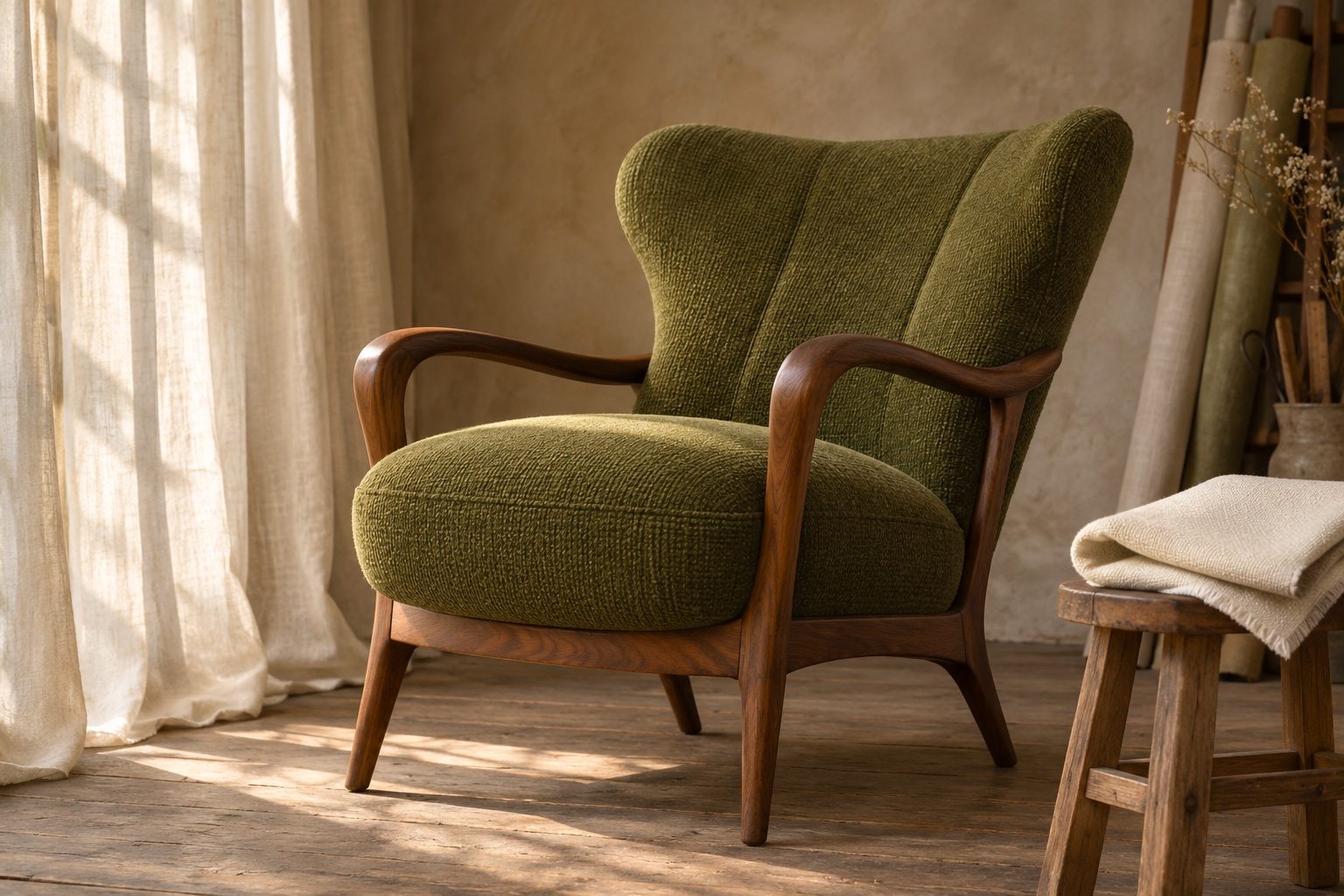
A particular seam, an exposed frame or the original silhouette may be central to the piece. Make those priorities clear before planning changes.
Age can bring fragile materials and hidden repairs. The underlying construction needs assessment to understand whether the upholstery project is practical.
A period-inspired textile and a contemporary fabric tell different stories. Both should be considered in relation to the shape and intended use.
It may. If historical or financial value is a concern, seek an appropriate appraisal or conservation opinion before altering the piece. Routine reupholstery and specialist conservation are different scopes.
Yes, surviving fabric and photographs can help communicate color, pattern and construction. Exact replacement materials may not be available, so alternatives need to be discussed openly.
That can be a project goal, but the original construction and current condition matter. Padding choices should be considered alongside the silhouette rather than treated as an unrelated comfort upgrade.
Tell us what you’d like to repair, restore or reimagine.
Text a full view of your piece and a close-up of what needs attention.