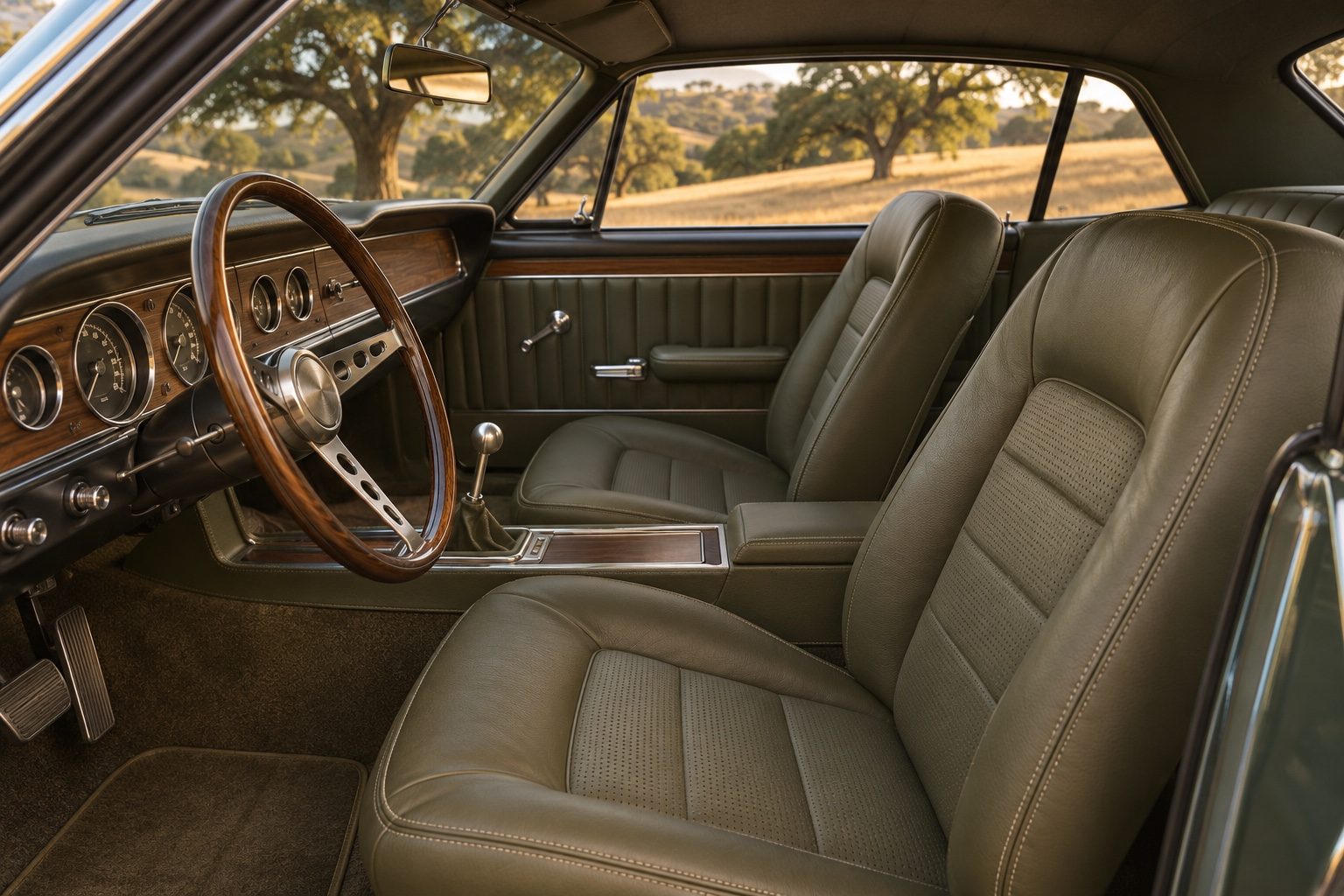
Keep the character that drew you to the car, then decide how the cabin should suit the way you use it today. A restomod upholstery plan brings classic lines and modern preferences together through seat shape, material, color and trim—with the vehicle’s other changes considered from the beginning.
Start with the elements that make the interior recognizable: a seat silhouette, a door-panel line or a familiar pattern. Reference photographs and surviving trim help identify which details should stay central as new materials and finishes are introduced.
Discuss comfort and seat construction
A different cover and a change in cushioning are separate decisions. Assess the existing foam, support and seat shape before planning adjustments. Replacement seats, mountings and restraints introduce additional requirements that must be coordinated with the people responsible for that work.
Build a coherent material direction
Seats, door panels, carpet, headliner and upholstered trim should be considered together, even when the work happens in stages. Compare color, texture and stitch details beside the exterior finish and retained parts so each choice supports the overall interior.
Coordinate parts and project timing
A revised console, different seats or changes around controls can affect fit and access. Share drawings, dimensions and the status of those components before final upholstery is planned. Coordinate fitting with paint, fabrication, mechanical work and assembly. Agree on responsibilities, dependencies and included surfaces before a completion date is confirmed.
BEFORE YOU BEGIN
Details that shape the work.
Year, make, model and the classic details you want to retain
Reference images showing the desired appearance and everyday use
Existing or planned changes to seats, console, controls and trim
The status of paint, mechanical work, fabrication and vehicle assembly
Common questions.
What is a restomod interior?+
It is an interior for an older vehicle that combines its classic character with selected modern preferences. For upholstery, that may involve materials, cushioning, colors or coordinated trim. The exact balance is defined for the car and the owner’s intended use.
Can original-looking details be kept?+
Yes, preserving selected shapes, patterns or trim can be part of the design direction. Existing condition, documentation and available materials determine how closely a detail can be retained or recreated. Define those priorities before the material choices are finalized.
Does restomod upholstery include building new seats or consoles?+
New structures, seat mountings and fabricated assemblies should not be assumed to be part of upholstery work. Explain the components already fitted or being made so their dimensions, condition and readiness can be considered, with responsibilities agreed before covering begins.
Can the interior be completed in stages?+
A staged plan may be practical, but fitting order, material availability and consistency across the cabin need attention. Establish the full direction first so work on one surface does not restrict the remaining parts of the project.
When should upholstery be planned during the build?+
Begin the conversation while the overall vehicle plan is taking shape. Final fitting should be coordinated with paint, fabrication, mechanical work and assembly. The right sequence depends on access, completed components and the agreed upholstery scope.