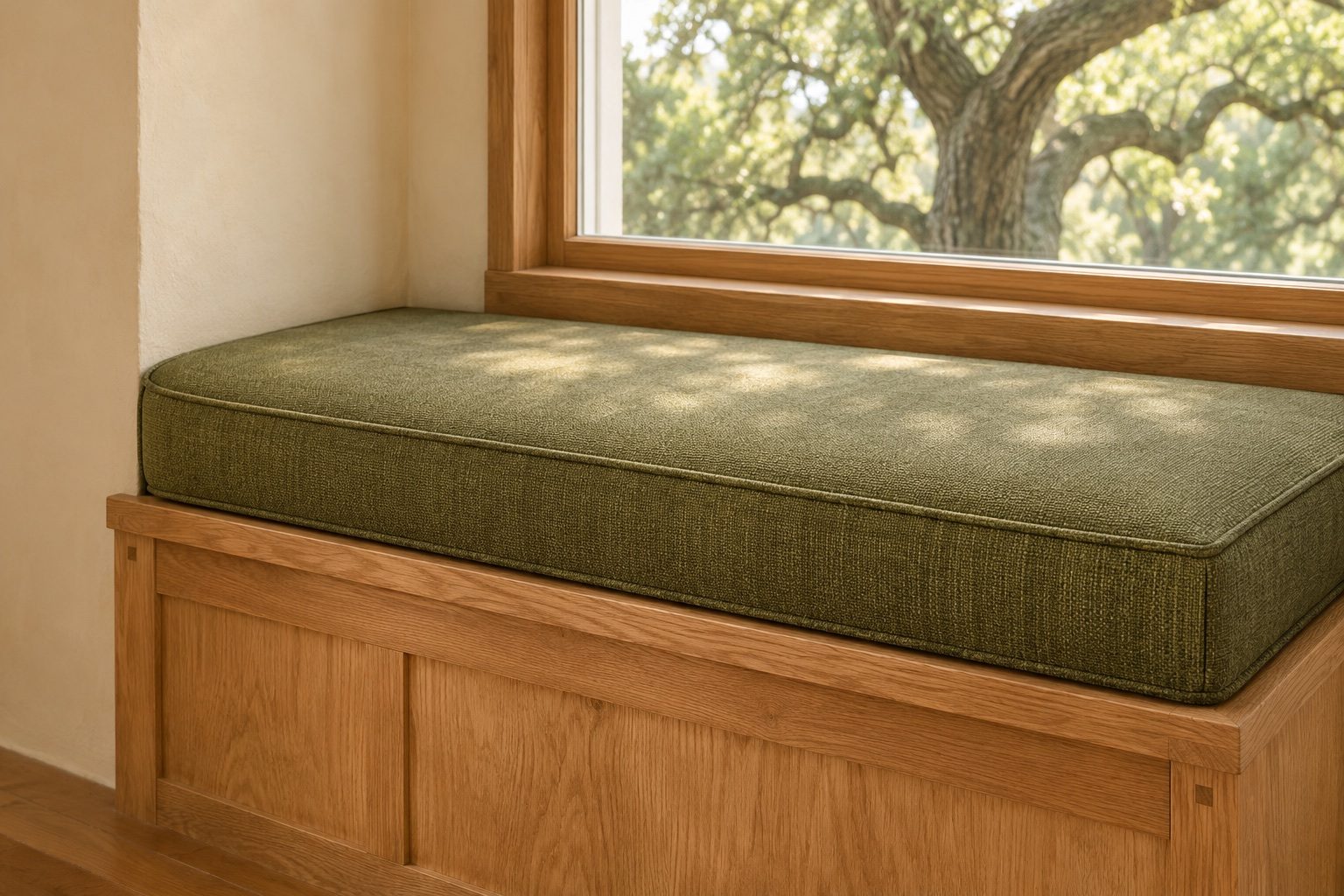
A window ledge, a hallway bench or a dining nook can become a place you want to linger. A fitted cushion starts with the space it belongs to: its shape, depth, nearby openings and everyday use. Then consider the thickness, fabric and finishing details that make the seat feel at home.
Show the complete bench or window seat, including corners, returns and any existing cushion. Approximate dimensions help begin the conversation, but the measurement and fitting process must be agreed before material is cut. An irregular opening may need more detail than a simple width and depth.
Choose thickness in context
Cushion thickness affects the finished appearance and how the seat relates to a table, window or surrounding trim. Discuss how the space is used and the feel you prefer, then consider suitable filling options. The base and available room help define a practical cushion profile.
Plan fabric, seams and patterns
Color, texture, piping and seam placement shape the result. Stripes, checks and larger patterns need to be considered across the full cushion or set. Discuss sunlight, everyday wear and cleaning expectations when comparing materials, including any limitations on removing or washing the cover.
Keep openings and access in view
A storage lid, hinge, window handle or nearby door may affect cushion shape and placement. Decide whether one long cushion or several sections will suit the space, and discuss any attachment needs. Upholstery work should fit the existing furniture; cabinetry changes require a separate plan.
BEFORE YOU BEGIN
Details that shape the work.
Photographs of the complete bench or window seat and its surroundings
Approximate width, depth and the cushion thickness you have in mind
Corners, storage lids, hinges, window handles or other clearances
Daily use, sunlight and your preferred feel and fabric
One cushion or several sections, plus any existing cushion to compare
Common questions.
Can a cushion be made for an unusual-shaped window seat?+
An irregular shape can be discussed using photographs and initial dimensions. The final measurements, pattern or template requirements and fitting process need to be confirmed for the space before cutting begins. A site visit or on-site templating is not automatically included.
How thick should a bench cushion be?+
That depends on the seat base, nearby table or window, intended use and the feel you want. Consider the finished sitting position and surrounding clearances together. Samples and a review of the space help establish a suitable filling and profile.
Can the cover be removable?+
A removable cover may be an option, depending on the cushion construction and fabric. Discuss openings and everyday care while choosing the material. A removable cover is not automatically machine washable; follow the care instructions for the selected fabric and filling.
Is one long cushion better than separate cushions?+
Either can suit the space. A long cushion creates one continuous surface, while separate sections may work more conveniently with storage lids or the way the bench is used. Pattern alignment, handling and the available shape should be considered before choosing.
Does this include building or altering the bench?+
The upholstery scope covers the agreed cushions and covers. Building cabinetry, altering a seat base or changing hinges is separate work. Identify those plans early so the cushion dimensions and clearances can be confirmed against the finished furniture.