New cover
Keep a suitable insert and change worn fabric, a damaged closure or the look of the cushion. Check the filling’s shape and condition before making a cover around it.
A worn cover and a flattened insert need different kinds of attention. Craig’s makes replacement cushion covers and inserts, with refilling or restuffing considered where the cushion construction suits it. Keep a fabric you love, change the feel underneath, or plan both together. Start with the shape, the furniture it belongs to and what you want to improve.
Text a full view of your piece and a close-up of what needs attention.
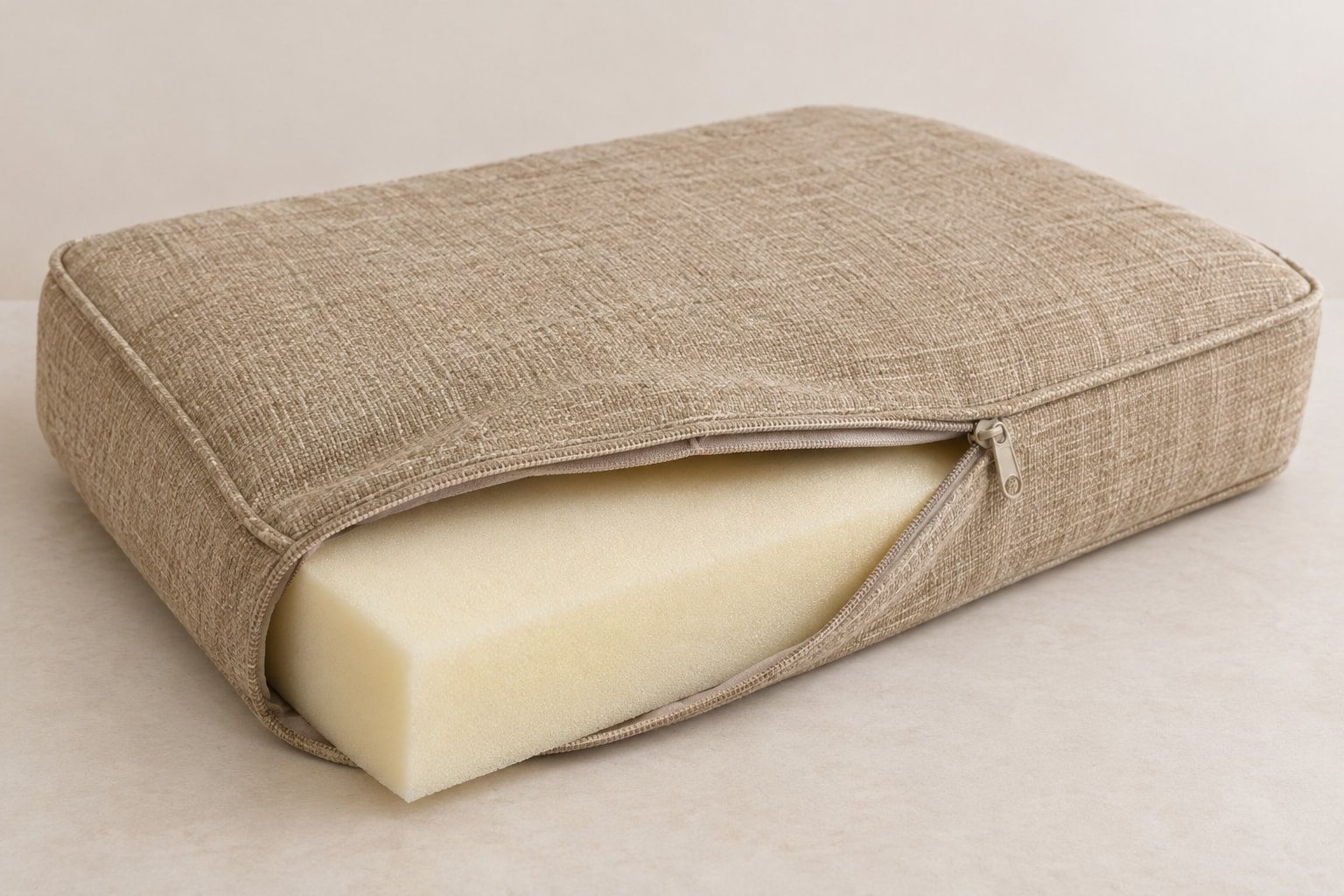
The cover and the filling can be considered separately. Their fit still needs to work together.
Keep a suitable insert and change worn fabric, a damaged closure or the look of the cushion. Check the filling’s shape and condition before making a cover around it.
Keep a sound cover and review the foam or filling inside. Describe what has changed and how soft, full or supportive you want the cushion to feel.
Plan the surface and comfort as one project when both need attention. The finished shape, thickness, fabric and closure can be considered from the start.
A flattened cushion and weak support beneath it can feel similar. Show the complete sofa, chair or bench as well as the loose cushion. Checking the furniture underneath helps avoid choosing an insert to compensate for a different problem.
Tapered sides, curved corners, boxed edges and cushions that wrap around an arm need more than a single width and depth. Existing cushions or covers provide useful references, but their stretch and distortion should be considered before a new pattern is made.
Refilling or restuffing a cushion and replacing a shaped foam insert are different approaches. The existing construction and the feel you want guide the discussion. Describe softness, fullness and support in your own words; firmer is not automatically more comfortable.
Check worn seams, stretched covers and zippers alongside the filling. A new closure, cover-only work or a coordinated recover may be appropriate to the condition. Discuss pattern placement, openings and care when selecting material. A removable cover is not automatically machine washable.
A full view and the details below help us discuss the scope. Final materials, measurements, cost and timing are agreed after assessment.
How to photograph your pieceYes, either can be the starting point. Sound inserts may work with new covers, while suitable existing covers may be reused around replacement filling. The condition and dimensions of both parts need to be checked so the finished cushion fits and keeps the intended shape.
That depends on how it is made and what has deteriorated. Loose filling, a shaped foam core and layered cushion constructions need different approaches. Show the existing cushion and any safely accessible opening so suitable refilling or replacement options can be discussed.
No. Comfort depends on your preference, cushion thickness, the way you sit and the support underneath. Explain how the current cushion feels and what you want to change. More firmness does not resolve every fit or support problem.
They help begin the conversation, but taper, curves, corner shape and cover stretch can change the final pattern. Photos and an existing cushion or cover may be needed as references. Confirm the measurement or template requirements before relying on dimensions alone.
Tell us what you’d like to repair, restore or reimagine.
Text a full view of your piece and a close-up of what needs attention.