Top surface
A broad top puts fabric texture, wear and pattern placement in view. Describe whether it is mainly a footrest, an occasional seat or a surface for a tray.
An ottoman can be a footrest, an extra seat or the piece that ties a room together. Craig’s reupholsters ottomans, footstools and upholstered poufs, with the top, sides and padding considered as one shape. Keep the familiar proportions or use a new fabric and finish to give the piece a different place in the room.
Text a full view of your piece and a close-up of what needs attention.
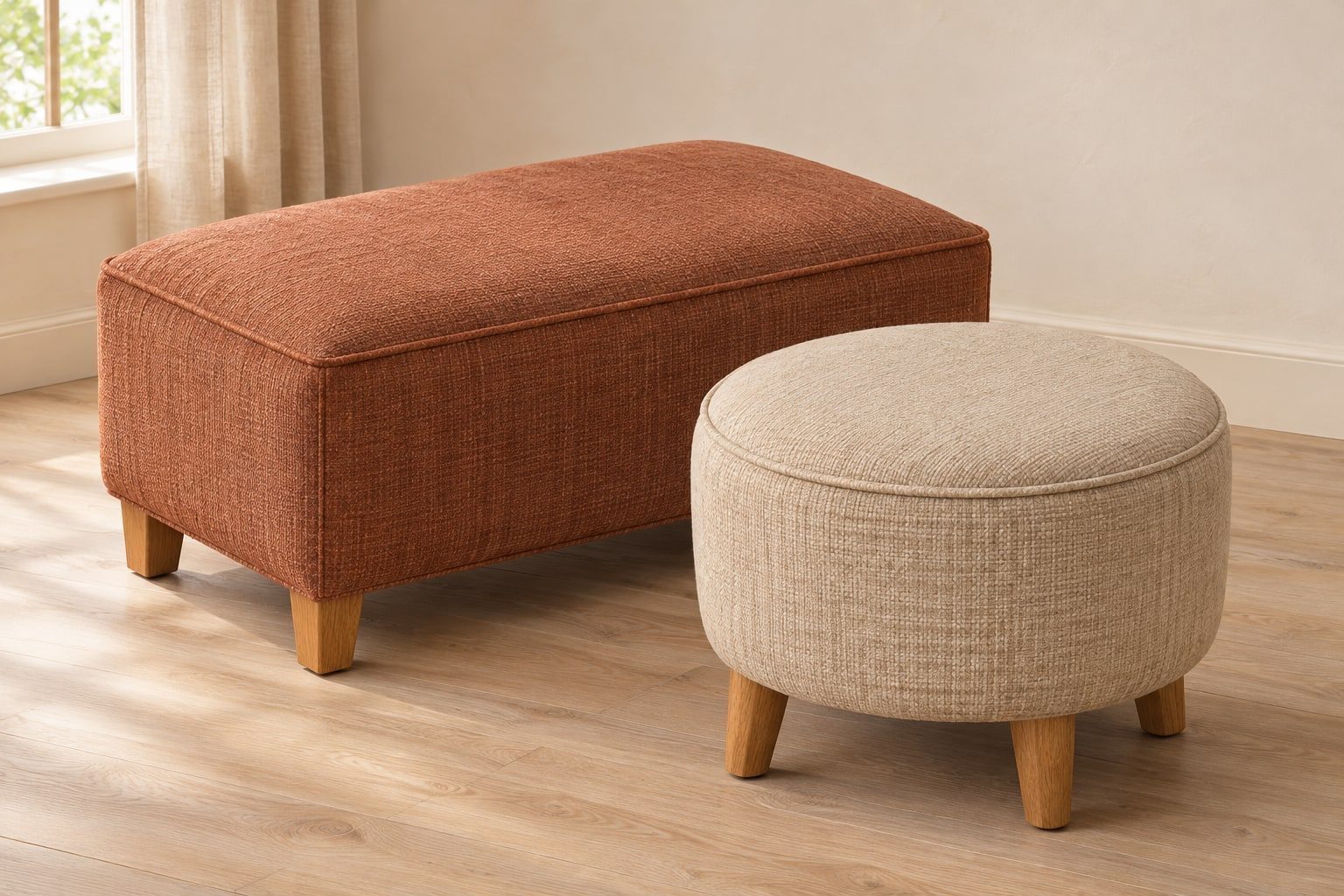
Look at the whole shape before choosing the fabric.
A broad top puts fabric texture, wear and pattern placement in view. Describe whether it is mainly a footrest, an occasional seat or a surface for a tray.
Boxed sides, curved panels, piping and seams define the outline. Decide which details should stay and which you want to change.
The padding and support help create the finished profile. Uneven or flattened areas need to be assessed alongside the cover.
A footrest, an ottoman used for occasional seating and an upholstered coffee-table piece meet different everyday needs. Tell us how yours is used, what feels comfortable and how it relates to the surrounding furniture.
Square corners, rounded sides and a softly gathered pouf need different tailoring. Show the top and all visible sides so seams, padding and proportions can be planned together.
A plain top, tufted surface, skirt or piped edge changes the character of the piece. Pattern direction and placement matter across the top and side panels, especially on stripes or a large motif.
If the ottoman opens for storage, include the lid, hinge area and interior edge in your photos. Those details affect the upholstery clearances. Any repair to hinges, legs or the wooden frame needs its own agreed scope.
A full view and the details below help us discuss the scope. Final materials, measurements, cost and timing are agreed after assessment.
How to photograph your pieceYes. Round ottomans and upholstered poufs can be discussed alongside square or rectangular footstools. Send views that show the complete shape and how the cover is assembled. The construction and condition will guide the pattern and padding work.
Yes. Share photographs of the surrounding furniture and any material references you have. The plan can use a close color relationship, a complementary texture or a deliberate contrast. An exact match to an existing fabric is subject to material availability.
Those details can be part of the design discussion. Some changes depend on the padding, supporting construction and how the existing cover is attached. Confirm the intended finish and its effect on the shape before work begins.
A new cover changes the surface, but the padding and support also need to be checked. If those parts need attention, include that work in the upholstery plan so the finished shape and feel are considered together.
Tell us what you’d like to repair, restore or reimagine.
Text a full view of your piece and a close-up of what needs attention.