Identify what has failed
Loss of surface finish, deep cracking and torn leather are different problems. The condition and flexibility of the remaining material guide the options.
Leather changes with use, but a torn bolster or worn surface does not have to define the interior. A useful assessment separates surface wear from damage through the material, then considers whether a local treatment, replacement panel or more extensive reupholstery makes sense for the seat.
Text a full view of your piece and a close-up of what needs attention.
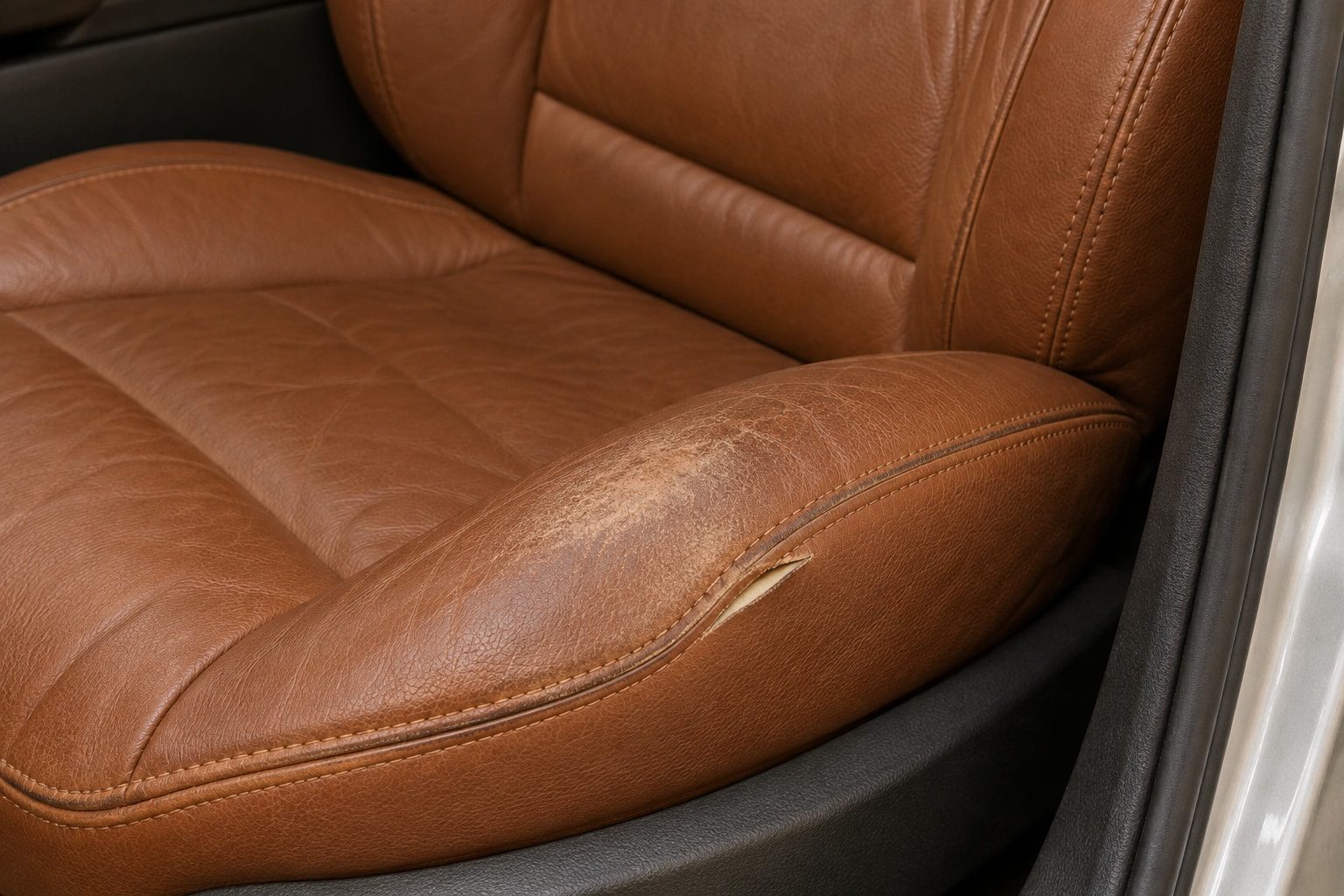
Loss of surface finish, deep cracking and torn leather are different problems. The condition and flexibility of the remaining material guide the options.
Leather varies in grain, sheen, thickness and color. Matching is a conversation about the whole interior, including its existing wear.
Worn bolster foam can make a new cover sit poorly. Assessing the padding alongside the leather helps avoid treating only the visible symptom.
No. A surface issue may allow a different approach from leather that is brittle or split through. An inspection is needed to judge whether repair or replacement is a reasonable choice.
A separate bolster panel can sometimes be replaced if the surrounding construction is suitable. Its shape, stitching, foam condition and any integrated seat features need to be checked first.
An invisible result should not be assumed. Original material availability, fading, grain and wear can affect the match. Comparing options in person helps set clear expectations.
Tell us what you’d like to repair, restore or reimagine.
Text a full view of your piece and a close-up of what needs attention.