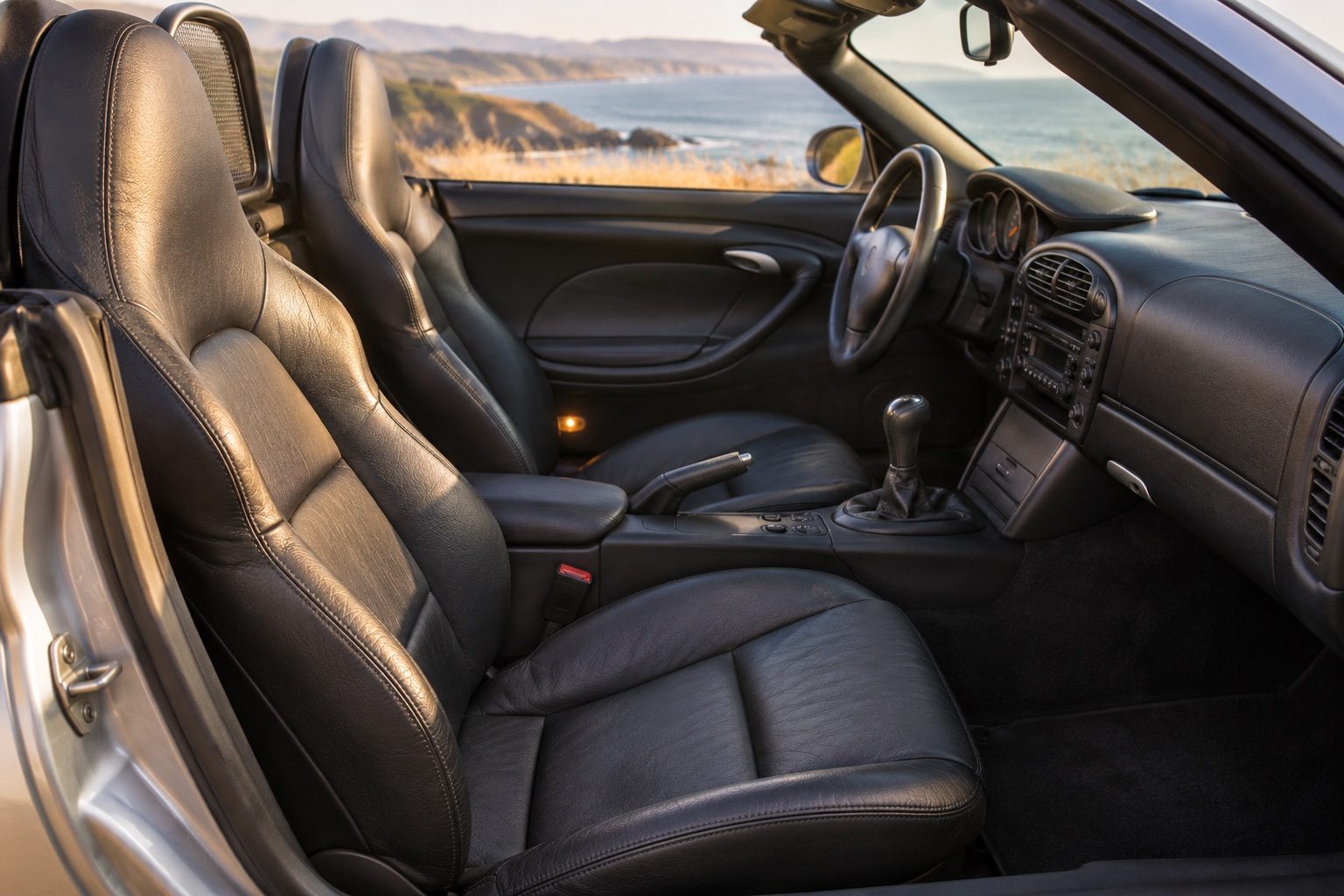
The shape of a bolster, the line of a seam, the texture beside the door handle: small details give a Porsche cabin its character. Plan the upholstery around your car’s year, model and existing condition, whether the starting point is one worn seat panel or several surfaces that need attention together.
Year, model, body style and seat configuration help establish what can be assessed. Previous alterations and integrated heating, ventilation, sensors or airbags matter too. Roof lining and convertible-top upholstery depend on the particular model; operating faults need a separate scope. Share photographs of the complete cabin and the affected area.
Assess the cover and support
A worn seat edge may involve the material, the foam beneath it or both. Local panel work, bolster rebuilding and a fuller re-cover are different scopes. The condition of the surrounding upholstery helps determine which approach fits the seat.
Compare the material in context
Color alone does not establish a match. Grain, sheen, perforation, seam placement and existing aging affect how new material sits beside the original surfaces. Compare available samples with the car before choosing a close original-style finish or a deliberate change.
Connect seats, panels and trim
Door inserts, armrests and other upholstered surfaces can be considered alongside the seats. A shared material direction helps the cabin feel coherent, while the written scope identifies exactly which components are included and which sound pieces will remain.
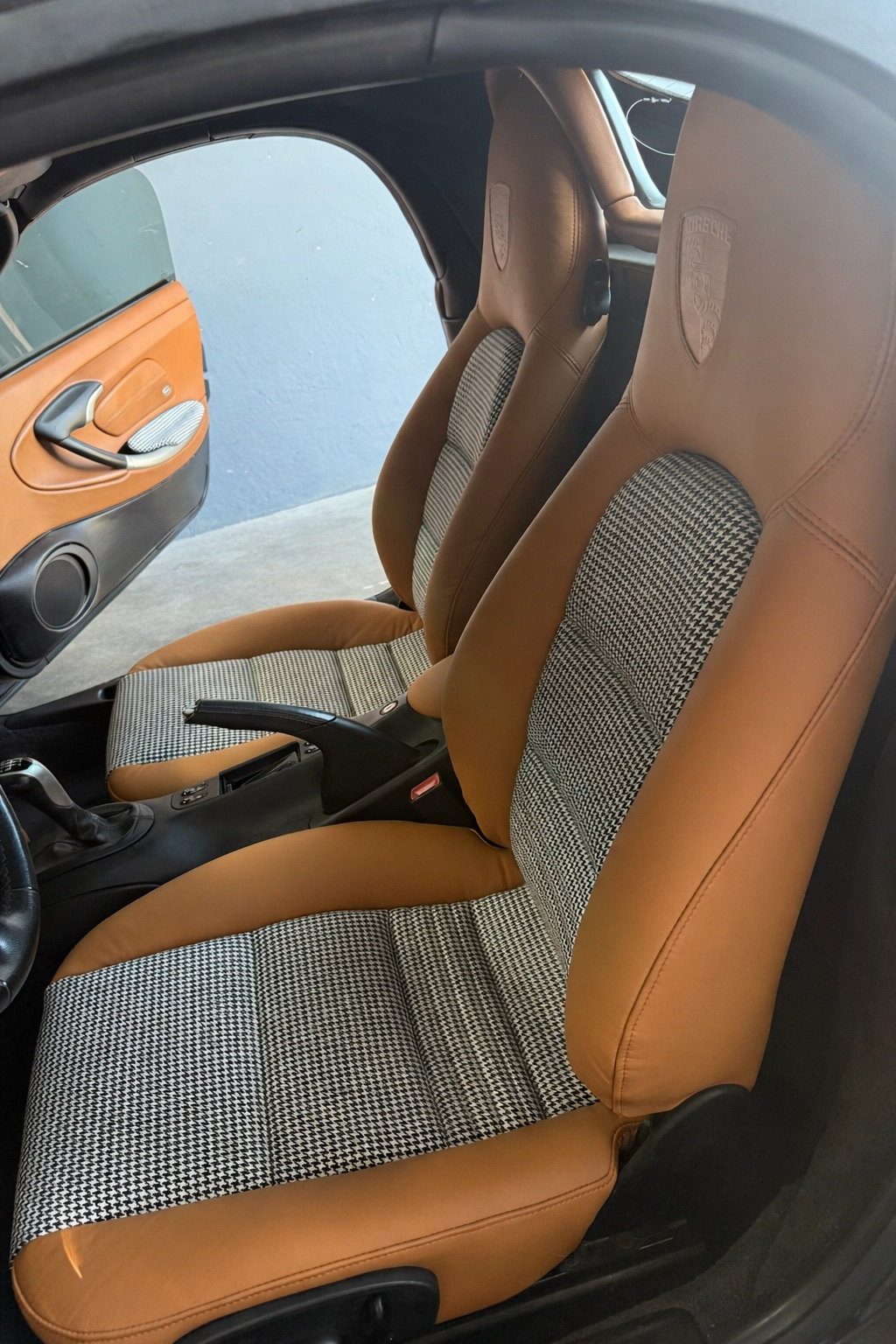
Saddle-toned bolsters frame houndstooth centers in this Boxster S seat project. The work included front seat covers, foam inspection and cover fitment, with a matching door insert. Photographs follow the seats from exposed foam through the finished covers and back into the cabin.
Whole-cabin photographs and close views of worn seams or bolsters
Original-style appearance, selective repair or a coordinated new finish
Previous alterations, integrated seat features and any roof concerns
Common questions.
Can just the worn bolster be repaired?+
A separate panel or bolster may be a suitable starting point if the surrounding cover and construction are sound. The foam, seams, material match and integrated seat features need assessment before the scope can be confirmed.
Can the upholstery match the original interior?+
That depends on the material available and how the existing cabin has aged. Color, grain, sheen and perforation should be compared together. An exact factory match or original specification should not be assumed before samples and documentation are reviewed.
Can seats and door panels be planned together?+
Yes, they can be considered as a coordinated upholstery project. Identify the surfaces you want changed and the pieces you want to keep, then agree on the materials and included work after assessment.
Does this include a Porsche headliner or convertible top?+
Those can be discussed using the year, model and roof configuration. Suitability and material supply must be checked for the particular car. Roof mechanisms, glass, seals and electrical faults are separate from the upholstery scope.
What should I include in a project brief?+
Give the year and model, show the complete seat or panel and the damage close up, and describe the result you want. Note previous changes and any heating, ventilation, sensor or roof concerns. Photographs begin the conversation; they do not replace an inspection.