Main panel
Height, outline and padding set the proportions. Decide whether to retain a plain surface or discuss channels or tufting.
A new textile can change the whole feeling of a bedroom while keeping the headboard you already like. Craig’s reupholsters headboards and existing upholstered bed panels, with padding, seams and the surrounding bed considered together. Bring photos of the complete piece and tell us whether you want a quiet refresh or a more noticeable change.
Text a full view of your piece and a close-up of what needs attention.
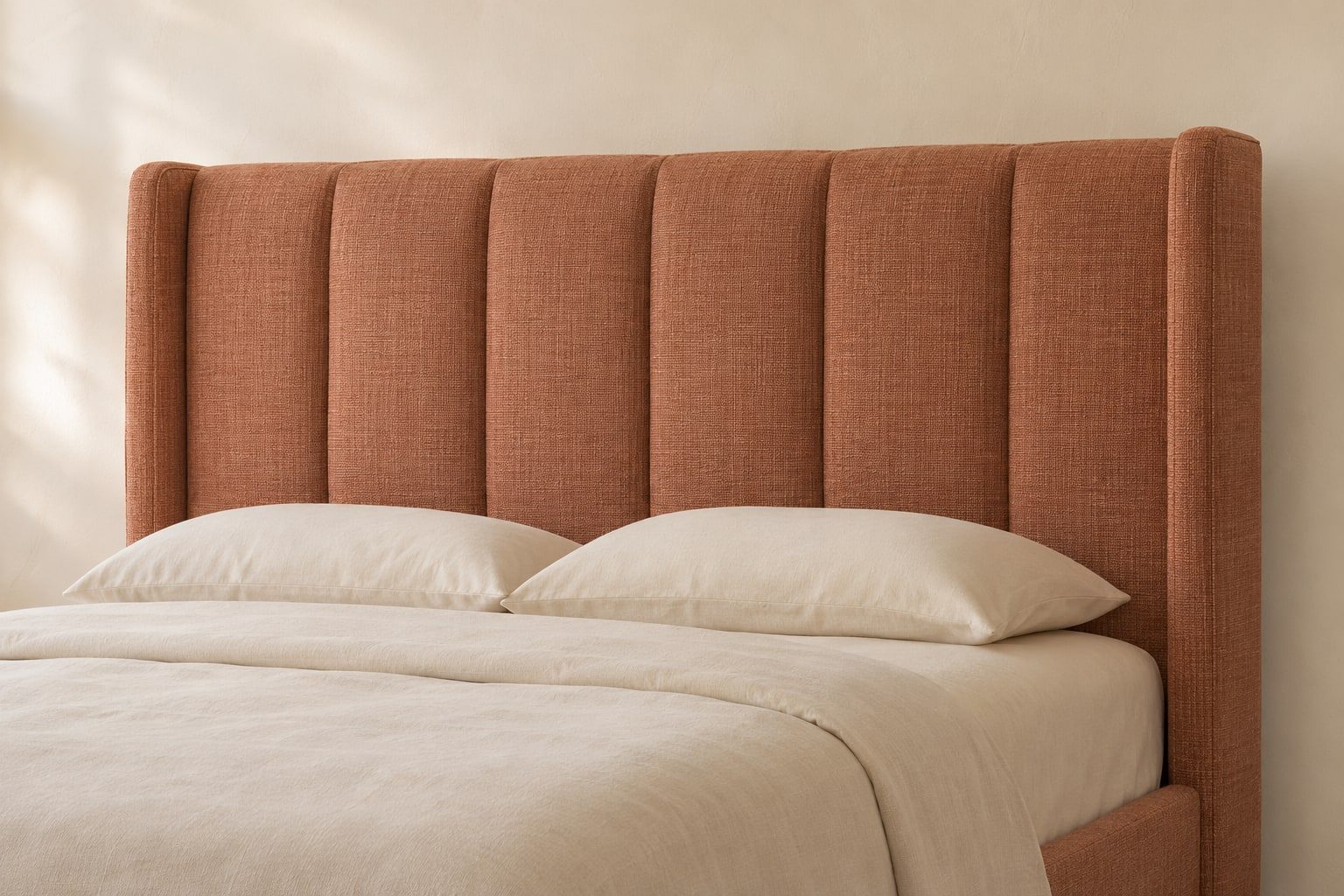
The visible panel, its edges and nearby surfaces all affect the result.
Height, outline and padding set the proportions. Decide whether to retain a plain surface or discuss channels or tufting.
Side wings, curves and visible returns continue the upholstery beyond the front face. Include them in the photos and material plan.
Existing upholstered rails or a footboard may be included in the same material plan. Identify every piece so quantities and scope are clear.
Show the bed or headboard in place, including side wings, exposed edges and any separate upholstered panels. Approximate dimensions help establish the scale; final measurements and the practical handling plan are agreed before work begins.
Plain upholstery, channels, tufting and piping give the headboard different character. Discuss the finish you want alongside the existing padding and construction, rather than assuming every design change uses the same underlying arrangement.
The headboard may meet pillows, hair products, daylight and regular leaning. Describe those conditions and your cleaning expectations when reviewing materials. The fabric’s care instructions and suitability need to match the intended use.
Identify whether the request covers the headboard alone or existing upholstered rails, wings or a footboard too. New bed-frame manufacture, structural alterations and mounting or installation arrangements are separate details to establish; do not dismantle the piece before the handling process is agreed.
A full view and the details below help us discuss the scope. Final materials, measurements, cost and timing are agreed after assessment.
How to photograph your pieceYes. Send overall and detail photographs so the shape, construction and condition can be reviewed. Include any side wings, curves or separate panels, and describe the fabric or design change you have in mind.
Existing upholstered bed rails and footboard panels can be included in the discussion. Show each piece and its approximate dimensions. A coordinated material plan should account for every upholstered surface and how the pieces relate.
That can be explored, with the existing structure, padding and intended pattern assessed first. The proposed design may need changes beneath the cover. Agree on those details and the resulting profile as part of the upholstery scope.
Start with photographs of the assembled piece. Do not detach or dismantle it just for the enquiry. The handling, access and any removal or refitting arrangements should be discussed once the construction is understood.
Tell us what you’d like to repair, restore or reimagine.
Text a full view of your piece and a close-up of what needs attention.