Affected area
Show the worn panel, seam or split clearly. Include its boundaries so a limited intervention can be considered against the rest of the cover.
The worn arm of a leather chair and a sofa that needs a full new cover call for different decisions. Craig’s works on leather furniture upholstery, from assessing affected panels to planning a broader recover. Start with the piece, the surrounding material and the way you want it to feel, then consider the leather, tailoring and support together.
Text a full view of your piece and a close-up of what needs attention.
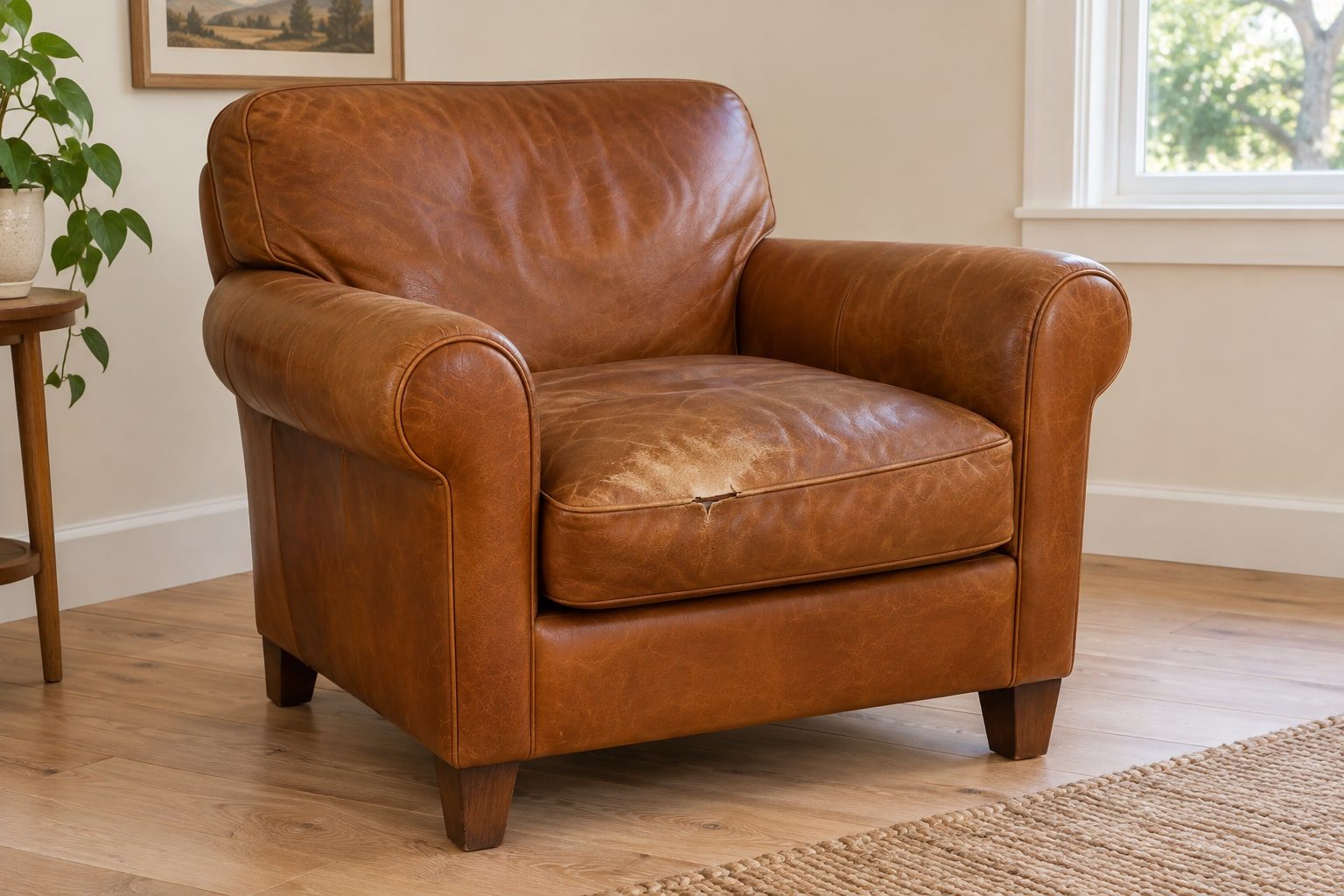
A close-up identifies the concern. The wider view helps choose the scope.
Show the worn panel, seam or split clearly. Include its boundaries so a limited intervention can be considered against the rest of the cover.
Color, grain, sheen and age affect how a replacement will relate to the material beside it. A match is a design decision to review, not an invisible-result promise.
The cushion filling and structure help determine the feel and silhouette. Cover work and comfort concerns should be assessed together.
Leather, coated or bonded materials and leather-look vinyl can age differently. Share labels or product information if you have them; a photograph alone may not establish the material. Review suitable upholstery options with the existing cover in view.
A localized area may be the starting point, but the surrounding material needs enough condition to support the chosen work. Adjacent wear, seam placement and matching expectations can make a broader cover replacement worth considering.
Sofas, armchairs, sectionals and ottomans have different shapes and panel arrangements. Include the sides and back, as well as the seat or arm that brought you here. Discuss padding and support if the furniture feels different as well as looking worn.
Grain, color, finish and the feel of the cover influence the result. If you want to change from leather to another upholstery material, discuss that alongside the furniture’s construction and everyday use. Cleaning, recoloring and surface-refinishing treatments are separate processes from reupholstery.
A full view and the details below help us discuss the scope. Final materials, measurements, cost and timing are agreed after assessment.
How to photograph your pieceThat may be suitable when the surrounding material and construction support a localized approach. The affected panel, adjacent wear and available material choices need to be reviewed together. Age and finish can make a replacement visibly different from the existing leather.
An exact match should not be assumed. Color, grain, sheen, age and available materials all affect the comparison. Discuss samples and the boundaries of the proposed work before choosing between a smaller replacement and a broader recover.
Send a clear close-up, a full view and any material label you can find. Different leather and leather-look constructions can produce different wear. Identifying the material and assessing the remaining cover are part of deciding a sensible upholstery scope.
Yes, a material change can be discussed. The piece’s construction, panel design, padding and intended use help guide a suitable fabric and tailoring plan. Show the complete furniture and explain what you want to change about its appearance or feel.
Tell us what you’d like to repair, restore or reimagine.
Text a full view of your piece and a close-up of what needs attention.