Work on the join
An opened seam or failed closure may be the focus when the surrounding cover remains suitable for reuse.
An open seam. A cushion zip that will not close. One worn panel on a sofa you still love. Craig’s repairs furniture upholstery with the condition around the damage in view. Start with photos of the whole piece and the problem; then consider whether a small repair, a new panel or a broader recover makes sense.
Text a full view of your piece and a close-up of what needs attention.
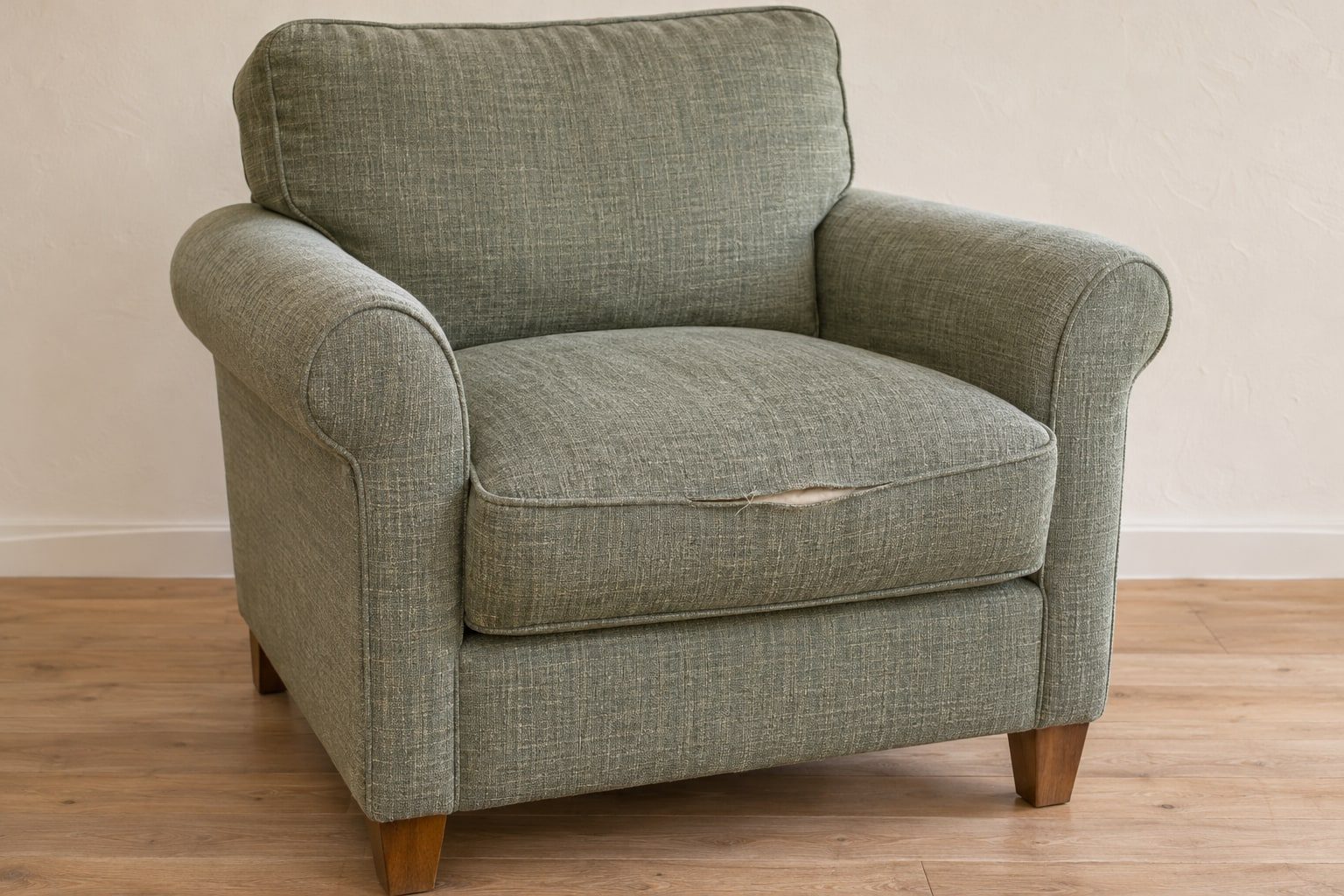
The size of the visible damage is one clue. The strength of the material around it helps shape the repair.
An opened seam or failed closure may be the focus when the surrounding cover remains suitable for reuse.
A worn panel may need new material. Its edges, attachment and relationship to neighboring panels affect the result.
Wear across several areas can make a complete recover more useful than a series of small repairs.
A split seam and fabric that is tearing beside a seam need different attention. Show the damage and a wider area around it so the strength of the cover, seam allowance and access can be assessed.
Color, texture, pattern and fading affect how a replacement section sits beside the existing upholstery. Decide whether your priority is keeping the current appearance, introducing a coordinated material or refreshing more of the piece.
A loose cover, compressed insert or uneven base may contribute to the problem you can see. Describe sagging or changes in comfort alongside the surface damage so the agreed work addresses the right parts.
Identify each affected area and any previous patches, adhesive or stitching. Before work begins, agree which seams, closures, panels and supporting upholstery work are included, along with the material choice and expected appearance.
A full view and the details below help us discuss the scope. Final materials, measurements, cost and timing are agreed after assessment.
How to photograph your pieceSometimes. The condition of the fabric, available seam allowance and access to the join matter. If the material itself is fraying or breaking down, restitching alone may not provide a useful repair; a replacement section or wider recover can be considered.
Cushion closures are part of the upholstery work Craig’s can assess. Show the zipper, its attachment and the condition of the surrounding cover. The suitable approach may involve the closure alone or additional work to the cover.
An exact match cannot be assumed. Material availability, wear and fading all affect the comparison. Review suitable options and how much of the furniture to recover before committing to a replacement section.
Consider how widely the cover is worn, whether the surrounding material can support a repair and what you want to keep about the piece. Photos begin that discussion; inspection helps establish the practical scope, materials and cost.
Tell us what you’d like to repair, restore or reimagine.
Text a full view of your piece and a close-up of what needs attention.